Italian market confirm positive results in 2016 for woodworking technology
The year 2016 closed positively: the final figures processed by the Studies Office of Acimall association for last year are aligned with forecasts, and reflect the positive atmosphere of the wood technology industry in Italy.
Production amounted to 2,057 million euro, 10.4 percent more than 1,864 in 2015. Such percent variation is similar to 2015 versus 2014, when the variation was 11.7 percent; so, two years of double-digit growth.
The figures provided by the Italian statistics institute Istat allow to draw a final balance of import and export: in 2016, sales abroad amounted to 1,495 million euro, 5.8 percent more than in 2015, when export had grown much stronger by 12.7 percent versus 2014.
End-of-year figures indicate that last year was largely positive, most and foremost for the domestic market which – driven by fiscal incentives and public support to the industry and, in general, to consumption – reached 562 million euro, 24.8 percent more than total sales in the previous twelve months.
The market situation is much more favorable, commented Dario Corbetta, Acimall director, and finally, it is not supported only by our strong export propensity, but also by an expansion of domestic demand and higher propensity to invest in instrumental goods. Such trend is confirmed by import, achieving 181 million euro, 19,4 percent more than in 2015.
2017 Forecast
The Italian market is lively and it is expected to get an additional boost from the “Industria 4.0” plan launched by the government. In this respect, the Studies office of the Confindustria member association indicates specific figures for 2017: the Italian market might grow by another 20 percent, passing the 700 million euro threshold. Also production is expanding, with an expected value of 2.2 billion euro (plus 10 percent compared to 2016) and 1.6 million export (plus 6 percent).

TE PUEDE INTERESAR
 Tiñe de rosa y blanco las calles en primavera: cuál es el árbol más lindo del mundo y por qué, según la IA
Sus ramas delicadas, los tonos suaves de sus pétalos y la forma armónica del árbol lo convierten en una imagen casi poética.
 El ADN de los bosques: descubren qué hace a un árbol resistir la sequía
Un equipo internacional, con participación del INTA y el Conicet, descubrió que la genética puede ser decisiva para que los árboles resistan mejor las sequías
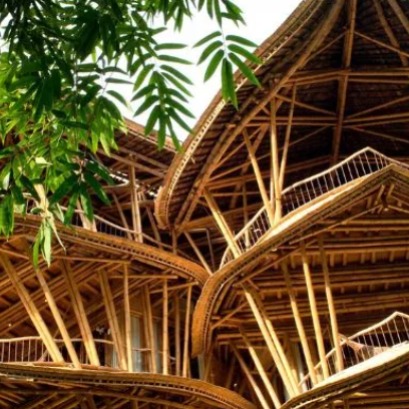 El país de América del Sur que cambia la construcción gracias a un material milenario mega resistible: más que el acero
Este material que crece en América del Sur crea las construcciones más resistentes y cambia radicalmente el mundo de la arquitectura Un material de construcción en particular ha sido utilizado durante milenios por diversas culturas de América del Sur. Esto se debe a su resistencia estructural que permite crear viviendas, puentes y refugios. Su presencia arqueológica demuestra que fue uno de los recursos constructivos más valorados en zonas sísmicas y húmedas