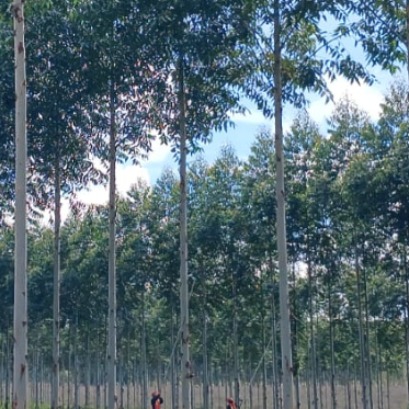
Paraguay | The plantations became instruments of territorial development and the generation of decent employment, INFONA highlights.
Plantings in different phases, control of ants and weeds, pruning and thinning, mechanized harvest, technology applied to the field and complete integration of the production cycle were part of the CREA Forestal proposal in its Technical Update Conference – JAT Forestal 2025. The event took place on Friday, November 14, at Estancia Ñemity, located in San Juan Nepomuceno, Caazapá, where agricultural producers, technicians, contractors, students and companies in the sector met to observe the forestry business of the future in action.
JAT Forestry 2025 included four thematic stops, where technologies, innovations and sustainable practices applied to the field were presented: Stop 1: Planting. Soil preparation, use of drones, weed control, liming and channeling.Stop 2: Forestry. Silvicultural management, pruning, thinning, second cycle plantations and ant control. Stop 3: Harvest. Live demonstration of mechanized harvesting, different methods, products obtained, yields and costs. Stop 4: Marketing. Main markets, national and international industries and export opportunities. During the day, INFONA delivered native seedlings, promoting forest restoration and reforestation with species appropriate for each region of the country. In addition, the technical team presented digital tools and strategic initiatives aimed at strengthening forest management and fire prevention in Paraguay. Among the materials on display were: Comprehensive Fire Management Portal, a platform that centralizes key information for planning, prevention and response to fires. Viewer Forest Fire Monitoring, a tool for public use for real-time monitoring of heat sources and active fires throughout the national territory. Forest Investment Portal, a space that provides technical, productive and economic information to encourage responsible investments in the forestry sector. Information material on prescribed burning, its correct planning and the requirements to carry it out safely and under technical criteria. Within the framework of the activity, the president of INFONA, Cristina Goralewski, highlighted the role of the sector in the development of the country, pointing out: "Forest plantations in Paraguay were not only a source of wood; they became true instruments of territorial development and the generation of decent employment." The presence of INFONA in this edition of the JAT reaffirmed its commitment to innovation, transparency, access to information and the promotion of sustainable forestry practices, closely accompanying producers and companies that are part of the Paraguayan forestry chain. CREA Forestal is a thematic group, it is not limited to a single region, but It brings together forestry producers from across the Eastern Region. They meet monthly to share their challenges, progress and expectations of the sector.
IT MAY INTEREST YOU
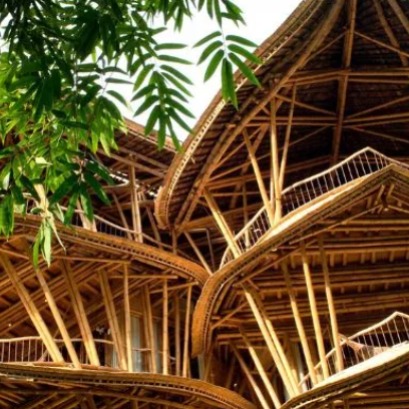 The South American country that changes construction thanks to an ancient, mega-resistant material: more than steel
This material that grows in South America creates the most resistant constructions and radically changes the world of architecture One particular building material has been used for millennia by various cultures in South America. This is due to its structural resistance that allows the creation of homes, bridges and shelters. Its archaeological presence shows that it was one of the most valued construction resources in seismic and humid areas.
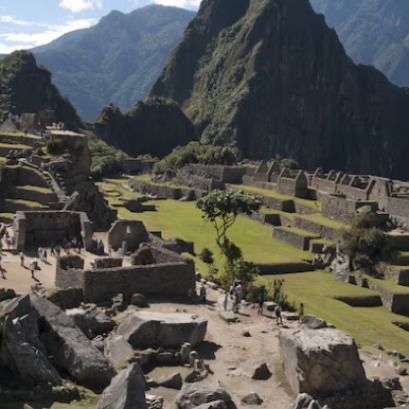 Reforestation advances in the Historic Sanctuary of Machu Picchu with new restored hectares
The plan includes the planting of a thousand new trees in the sanctuary, in response to the damage caused by forest fires and environmental threats, with the support of local authorities and representatives of the tourism sector.
 Nation reinforces prevention and training against forest fires
The director of the Federal Emergency Agency (AFE), Santiago Hardie, referred to the support that the Nation provides in fighting fires. He argued that the majority of igneous sources respond to human interventions and that, therefore, social awareness is a central tool to reduce environmental, material and human damage.