Architecture with identity: university students from Argentina and Paraguay design and build with missionary wood
The Faculty of Art and Design (FAyD) of the National University of Misiones (UNaM) hosted the inauguration of the first edition of “Yvyvyrá: territory, matter and architecture”, an international workshop that promotes learning, experimentation and architectural design using wood and other materials typical of the biomes of the Atlantic Forest (Paranaense Forest) and the Humid Chaco.
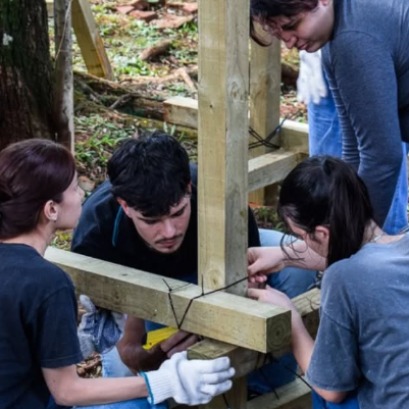
The meeting, which will last three days, brings together students and teachers from UNaM and the Faculty of Architecture, Design and Art of the National University of Asunción (FADA-UNA), with the purpose of rethinking architecture from the matter and the territory we inhabit, integrating academic, technical and cultural knowledge. A space to think and create from wood The opening day took place on Thursday at the FAyD campus in Oberá, and included a welcome at the INN Institute, discussions, and a collaborative design workshop in which the relationship between territory, matter and architecture was reflected from a contemporary, sustainable and environmentally committed perspective. The meeting is organized by the FAyD-UNaM, within the framework of its 4\0th anniversary, and is co-organized by the FADA-UNA. Accompanying the initiative are APICOFOM, OBERARQ, Casa Wurm, Corteza SRL and Oberprint, institutions and companies that collaborate with materials, tools and technical support.Collective construction and experimentationThe second day, held on Friday, was dedicated to the construction phase, in which teams of students and teachers gave shape to the architectural devices projected the previous day.During the entire day, the FAyD campus became a collaborative work space where groups explored the possibilities construction techniques of local wood, putting into practice the learning that emerged in the discussions and workshops. The process had the joint mentoring of teachers from UNaM and FADA-UNA, and the support of the participating institutions and companies, which provided resources, knowledge and technical support. The day was lived with intensity, creativity and collective spirit, reflecting the potential of regional architectural design as a cultural and ecological expression. The registration and documentation team was made up of Leonardo López, Claudia Procopio, Cristian Klein, Luis Kuziw, Mariano Malaquías, Carlos Enrique Tarón, Maximiliano Martínez, Antonella Centurión, Santiago Horrisberger, Jorge Torres, Santiago Ríos Bony, Ángela Valentina Krauss, Leandro Lukaszuk and Mauricio Daniel Salgado, who accompanied the development of the workshop and the construction of the experimental works.
IT MAY INTEREST YOU
 Color the streets pink and white in spring: which is the most beautiful tree in the world and why, according to AI
Its delicate branches, the soft tones of its petals and the harmonious shape of the tree make it an almost poetic image.
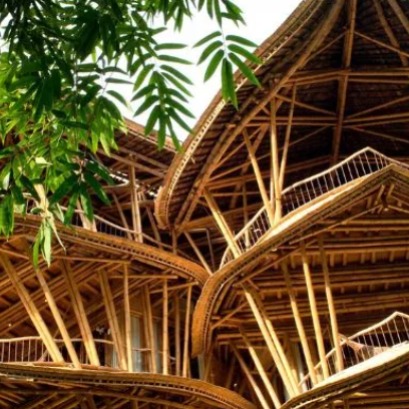 The South American country that changes construction thanks to an ancient, mega-resistant material: more than steel
This material that grows in South America creates the most resistant constructions and radically changes the world of architecture One particular building material has been used for millennia by various cultures in South America. This is due to its structural resistance that allows the creation of homes, bridges and shelters. Its archaeological presence shows that it was one of the most valued construction resources in seismic and humid areas.
 The discovery of methane-producing bacteria in trees rethinks the ecological role of forests
Pioneering study shows trees surprising internal microbial diversity and potential influence on global climate, driving novel strategies for agricultural and forestry management