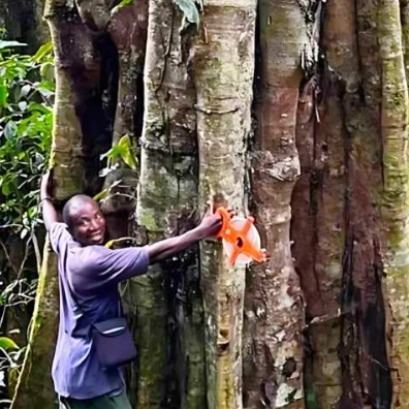
Botanists discover giant trees up to 3, years old in Tanzania, unknown until now by science
Scientists have identified a new species of giant tree, Tessmannia princeps, in the Udzungwa Mountains. This species had never before been recorded by science.
• Unknown tree for millennia.• New emblem of conservation in Tanzania.• Only about 1 living specimens.• Up to 4 meters high and 2.7 meters in diameter.• Captures carbon for millennia.• Key to understanding climate, soils and biodiversity.Discovering Tessmannia princepsAn international team of botanists, led by Andrea Bianchi from the Science Museum of Trento, Italy, together with Tanzanian experts, reported a new species in 225. large tree in the Udzungwa Mountains, within the Eastern Arc mountain system. The discovery, published in the journal Phytotaxa (694(2): 19–118), describes Tessmannia princeps as an emergent arboreal legume that inhabits remote and elevated areas of the tropical humid forest. The discovery occurred in 219 during flora mapping in the Boma la Mzinga and Uluti forest reserves. The species stands out not only for its height, which exceeds 4 meters, but for its solid trunks, up to 2.7 meters in diameter, crowning the forest canopy in very localized clearings. An imposing tree, still little known The name princeps, from the Latin most eminent, alludes to the majestic bearing of the tree, whose crown protrudes above the canopy and whose base shows prominent buttress trunks. These structures are typical of tropical trees that grow in poor soils and help stabilize specimens of great structural mass. Although no formal studies have yet been published on the internal anatomy or growth dynamics of T. princeps, researchers noted in the field that some fallen trunks show dense wood and slow growth, characteristics that could be associated with considerable longevity. However, there are no published scientific estimates of its age or carbon content. Any data on this should be considered an unconfirmed hypothesis. Why did it go unnoticed? The geographic isolation and dense cloud cover of these mountains have kept parts of the ecosystem relatively intact. The trees are found between 1,28 and 1,52 meters above sea level, in steep valleys where human intervention has been minimal. Until recently, even local botanists assumed that all large tree legume species had already been described. This discovery highlights how much remains to be known about the biodiversity of the tropics and reinforces the value of preserving even small forest fragments. Conservation underway With an estimated population of less than 1, individuals, Tessmannia princeps meets the criteria for the Vulnerable category according to the IUCN. Although logging is prohibited in the area, neighboring crops, uncontrolled fires and possible infrastructure developments represent indirect threats. The tree has already begun to be used as a flagship species for conservation programs. Their presence validates the approach of conserving narrow biological corridors, a key strategy in fragmented regions of the tropics. In addition, it promotes collaboration between local communities, scientific institutions and environmental authorities.What Tessmannia princeps can teach usAlthough its contribution to carbon storage has not yet been evaluated with empirical data, trees of its size and structure can play a relevant role in forest dynamics and microclimate regulation. Studies of similar species in tropical forests suggest that large trees could store between 2 and 3 tons of carbon, depending on their density, volume and architecture. Beyond carbon, these trees act as centers of biodiversity, offering habitat to other species, stabilizing the soil and facilitating the regeneration of undergrowth. Future analysis of its wood, its phenology and its ecological relationships may shed light on how certain species adapt and persist in humid tropical environments for centuries.
IT MAY INTEREST YOU
 Nation reinforces prevention and training against forest fires
The director of the Federal Emergency Agency (AFE), Santiago Hardie, referred to the support that the Nation provides in fighting fires. He argued that the majority of igneous sources respond to human interventions and that, therefore, social awareness is a central tool to reduce environmental, material and human damage.
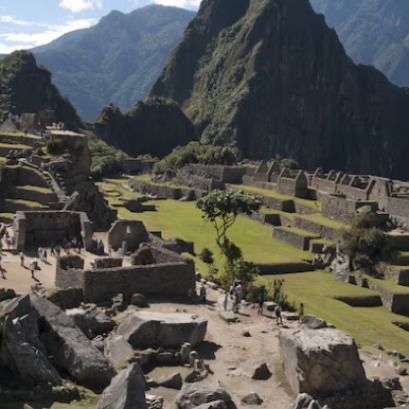 Reforestation advances in the Historic Sanctuary of Machu Picchu with new restored hectares
The plan includes the planting of a thousand new trees in the sanctuary, in response to the damage caused by forest fires and environmental threats, with the support of local authorities and representatives of the tourism sector.
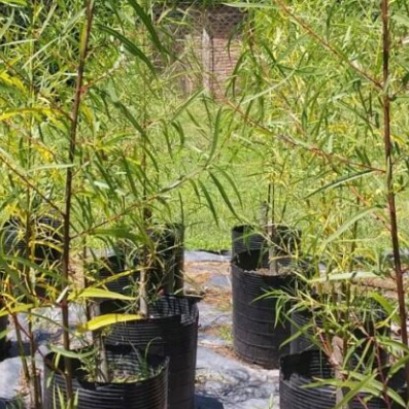 INTA Delta begins propagation of seven Creole willow clones for ecological restoration in Paraná
As a result of the rescue, domestication and registration work carried out by Teresa Cerrillo, a leading researcher in Salix Genetic Improvement, within the framework of the National Genetic and Forest Resources Programs of INTA, the multiplication and propagation of seven clones of Creole willow (Salix humboldtiana) began recently registered in the National Seed Institute (INASE) by INTA Delta del Paraná.