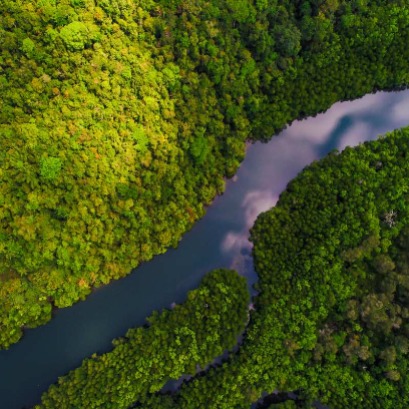
New study confirms that reforesting the tropics is up to 9 times more effective in cooling the planet than in cold regions, tropical trees cool more and renounce
The plantation in the tropics has the greatest positive impact. Trees in warm and humid areas cool the weather and are more resistant to fire. Evapotranspiration (similar to sweat in humans) cools air and earthly surface.
? Tropical trees: more effective ? Real, measurable local cooling ? More humidity, more clouds, less sun. But not all trees, not all regions, offer the same benefits. A new study by the University of California in Riverside makes it clear that the greatest positive impact occurs when trees are planted in the tropics. There, they not only capture more carbon, but also cool the environment much more effectively. Plant yes, but with strategy the study, published in NPJ Climate and Atmospheric Science, analyzed the physical effects - beyond the kidnapping of carbon - to plant trees in different latitudes. In warm and humid places, such as the Amazon, the Congo or the Southeast Asia, the trees grow all year, they release more water vapor and cool more. On the other hand, in cold or dry areas, the effect can be the opposite: increased temperature by solar absorption and lower evapotranspiration. This phenomenon is explained by a natural process: evapotranspiration, or vegetable sweating. By absorbing soil water and releasing it in the form of steam, trees cool the air similar to how sweat cools the human body. In the tropics, where there is a continuous availability of water, this effect is amplified. In addition, the generated water vapor favors cloud formation, which reduces direct solar radiation. This side effect, although less known, contributes significantly to local cooling. Measured dishes, although it inequally inequally disseminates the direct cooling by evapotranspiration is modest (approximately 0.005 ° C, or 0.01 ° F), in certain tropical regions it can become considerable. In the center of Africa, for example, descents of up to 0.45 ° C (0.8 ° F) have been recorded in the surface temperature thanks to tree densification. Summary carbon kidnapping, the total effect of reforesting tropical areas can contribute to reducing the average global temperature up to 0.1 ° C to 0.2 ° C. Although they seem small figures, they are relevant at global climatic scale, especially when combined with other mitigation measures. Memons fire where it imports benefit not less is the reduction of fire risk in ecosystems such as tropical savannas. In these environments, trees act as a barrier in front of fires, which usually spread more easily in dry grasslands. This has direct implications for countries such as Brazil, Zambia or Indonesia, where the fire linked to agricultural activities is a recurrent threat. On the contrary, planting trees in certain regions of the northern hemisphere can have the opposite effect. In areas such as the northeast of the United States or southern Canada, poorly planned reforestation can increase heat retention and favor fires due to the greater absorption of solar radiation and the accumulation of dry biomass. Using data from 12 international climatic models, researchers prioritized areas where there was recent deforestation, avoiding agricultural or inhabited land. This most realistic approach allows maximizing benefits without compromising food production or access to land. In line, initiatives such as the Great Green Wall in Africa, which seeks to restore 8,000 kilometers of degraded savanna from Senegal to Yibuti, are aligned with this logic: recover functional ecosystems where trees can prosper without displacing communities.
IT MAY INTEREST YOU
 The DNA of forests: they discover what makes a tree resist drought
An international team, with the participation of INTA and Conicet, discovered that genetics can be decisive for trees to better resist droughts
 Nation reinforces prevention and training against forest fires
The director of the Federal Emergency Agency (AFE), Santiago Hardie, referred to the support that the Nation provides in fighting fires. He argued that the majority of igneous sources respond to human interventions and that, therefore, social awareness is a central tool to reduce environmental, material and human damage.
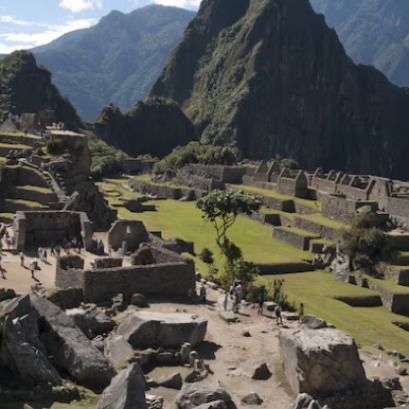 Reforestation advances in the Historic Sanctuary of Machu Picchu with new restored hectares
The plan includes the planting of a thousand new trees in the sanctuary, in response to the damage caused by forest fires and environmental threats, with the support of local authorities and representatives of the tourism sector.