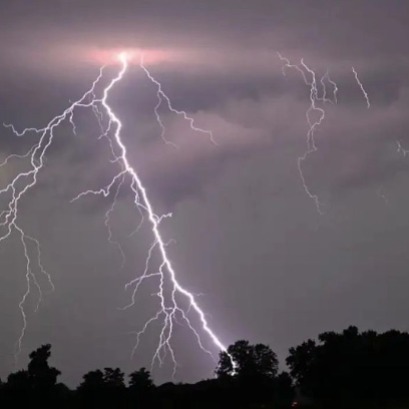
320 million trees die every year due to ray fall
Researchers from the Technical University of Munich (TUM) have developed new calculation models that, for the first time, estimate the global influence of rays in forest ecosystems.
According to its findings, published in Global Change Biology, it is estimated that 320 million trees die each year due to the fall of rays.Tree losses caused by forest fires caused directly by rays are not included in these figures. In the future, the mortality of light -induced trees could increase due to the increase in the frequency of flashes.Damage caused by rays in forests are usually difficult to detect and have only been systematically studied in a few places. Until now, it was not known with certainty how many trees die every year around the world due to direct damage to rays. The TUM research team has developed the first method to estimate how many trees are so severely affected by rays that finally die. Its conclusion: the ecological impact of the rays has underestimated.While the previous studies focused on field observations in individual forests, TUM researchers adopted a mathematical approach. They expanded a widely used global vegetation model by integrating observational data and global patterns of rays.Now we can not only estimate how many trees die annually by rays, but also to identify the most affected regions and evaluate the implications for global carbon storage and forest structure, explains in a statement Andreas Krause, principal author of the study and researcher of the chair of interactions Earth-Atmosphere surface.The 320 million victims every year of the rays represent between 2.1 % and 2.9 % of the total annual plant biomass loss. It is estimated that this biomass decomposition issues between 770 and 1,090 million tons of CO2 per year.The researchers emphasize that these emissions are surprisingly high: their magnitude is comparable to that of approximately 1,260 million tons of CO2 that are released annually due to the combustion of live plants in forest fires. However, total CO2 emissions of forest fires are substantially higher (around 5,850 million tons per year), since they also include the burning of dead wood and organic matter of the soil. More in the futureThe 320 million victims every year of the rays represent between 2.1 % and 2.9 % of the total annual plant biomass loss. It is estimated that this biomass decomposition issues between 770 and 1,090 million tons of CO2 per year.The researchers emphasize that these emissions are surprisingly high: their magnitude is comparable to that of approximately 1,260 million tons of CO2 that are released annually due to the combustion of live plants in forest fires. However, total CO2 emissions of forest fires are substantially higher (around 5,850 million tons per year), since they also include the burning of dead wood and organic matter of the soil. Most climatic models project an increase in rays frequency in the coming decades, so it is convenient to pay more attention to this disturbance, largely ignored, says Krause.Currently, the mortality of ray -induced trees is greater in tropical regions. However, the models suggest that the ray frequency will increase mainly in the regions of medium and high latitudes, which means that ray mortality could also charge greater relevance in temperate and boreal forests.
IT MAY INTEREST YOU
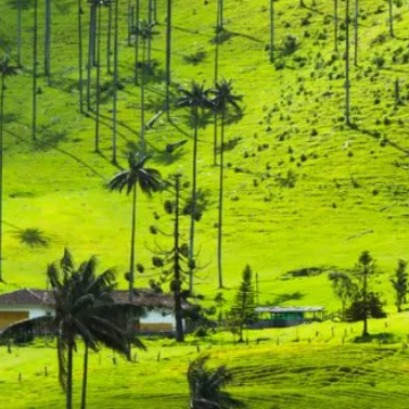 The tallest palm tree in the world is in South America: it is the height of a 20-story building
The worlds tallest palm tree stands deep in South America, a giant that challenges the limits of plant life Deep in South America, between the fog and the mountains, hides a giant tree that few know about. Majestic and silent, challenging the world on what plant life can achieve.
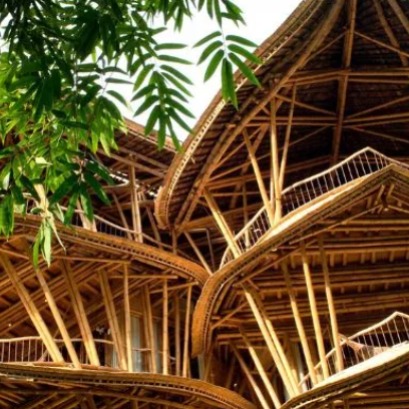 The South American country that changes construction thanks to an ancient, mega-resistant material: more than steel
This material that grows in South America creates the most resistant constructions and radically changes the world of architecture One particular building material has been used for millennia by various cultures in South America. This is due to its structural resistance that allows the creation of homes, bridges and shelters. Its archaeological presence shows that it was one of the most valued construction resources in seismic and humid areas.
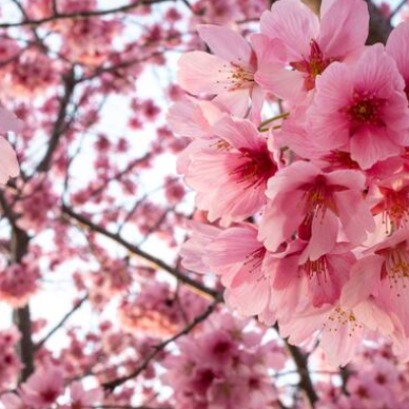 Color the streets pink and white in spring: which is the most beautiful tree in the world and why, according to AI
Its delicate branches, the soft tones of its petals and the harmonious shape of the tree make it an almost poetic image.