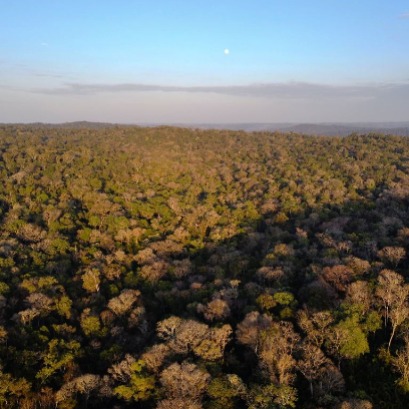
The planet is heating and in the trees is the solution to generate green islands for resilient cities
While accepting the hard truth that 2024 marked the first year in which global temperatures exceeded 1.5 ° C threshold established by the Paris Agreement, recognizing the vital role of forests and trees in climate regulation has never been more crucial
The trees provide us with essential shadow, reducing temperatures at land between 2 and 8 ° C in urban areas and up to 15 ° C in rural environments. This direct shadow effect is particularly significant to mitigate the effects of heat islands in urban areas, where cities usually experience temperatures of 1 to 3 ° C higher than the surrounding rural areas. Evapotranspiration, the process by which the water evaporates from the leaves and the surrounding soil, also contributes to the cooling of the environment. As the water changes steam fluid, it absorbs heat from the surrounding air, reducing local temperatures. A mature tree can perspire up to 400 liters of water daily, creating a natural air conditioning effect. This process absorbs large amounts of thermal energy, with studies that show that a single large tree can provide the same cooling effect equivalent to that of 10 air conditioners operating for 20 hours a day. The Albedo effect of forests also plays a vital role, although complex, in temperature regulation. Tropical and temperate forests have a low albedo compared to other terrestrial coverage, which means that they absorb more solar radiation and contribute to environmental cooling. Boreal forests, with their darkest canopies, present a unique case where deforestation could lead to cooling due to strong effects of Albedo on the surface. In cold conditions, the Albedo of snow and vegetation predominates, causing boreal forests to heat the climate. Research has also highlighted the role of forests in the generation of biogenic volatile organic compounds, which can lead to aerosols formation. These aerosols can influence cloud formation and precipitation patterns, indirectly affecting both local and global temperatures. Healthy forests act as vital sinks of carbon, currently absorbing around 7.6 billion tons of CO2 annually, which is equivalent to approximately 20 % of human emissions. Tropical forests alone store around 250 billion tons of carbon in their biomass. The capacity of the forests to kidnap carbon varies according to their age and type, with mature tropical forests absorbing approximately 2.4 tons of carbon per hectare per year. Disagreement, deforestation and climate change increasingly threaten the regulatory effects of temperature of the forests. Global forest loss not only reduces these temperature regulation benefits, but can create a feedback cycle where higher temperatures generate greater stress and mortality in forests, potentially turning some of them from sinks to carbon sources. The impact of deforestation on global temperatures has been severe and well documented. Between 2000 and 2023, the world lost more than 130 million hectares of tropical forests. This devastating loss has contributed significantly to the increase in global temperatures, with deforested areas showing temperature increases up to 4 ° C (and also reduction of rainfall ... although that is another story) compared to nearby wooded regions. Example, Australian forest fires in 2019-2020 released approximately 830 million tons of CO2, demonstrating how climate change can trigger devastating feedback cycles. In that sense, science is clear: forests and trees represent one of our most powerful natural tools to regulate global temperatures and mitigate the impacts of climate change. fronts: 1. Protect intact or almost intact forests that remain. 2. Promote solid reforestation and afforestation initiatives. 3. Implement sustainable forest management practices. 4. Integrate the protection and restoration of forests into climatic policies. 5. Support indigenous communities as guardians of the lands. The global forest coverage has constantly decreased since 2000, with the loss of particularly acute primary forests in tropical regions. If some countries have advanced in reforestation efforts, the net loss of primary forests continues at an alarming rate of approximately 3.8 million hectares per year. This loss is strongly correlated with the accelerated increase in global temperatures, contributing to overcoming the threshold of 1.5 ° C in 2024. On June the International Forest Day was celebrated, with the confirmation that we have crossed a threshold of 1.5 ° C in 2024 should serve as a forceful reminder that we have to act with decision to protect and expand our forest resources. Temperature and carbon kidnapping makes them indispensable allies in our fight against climate change.
IT MAY INTEREST YOU
 Nation reinforces prevention and training against forest fires
The director of the Federal Emergency Agency (AFE), Santiago Hardie, referred to the support that the Nation provides in fighting fires. He argued that the majority of igneous sources respond to human interventions and that, therefore, social awareness is a central tool to reduce environmental, material and human damage.
 The discovery of methane-producing bacteria in trees rethinks the ecological role of forests
Pioneering study shows trees surprising internal microbial diversity and potential influence on global climate, driving novel strategies for agricultural and forestry management
 The South American country that changes construction thanks to an ancient, mega-resistant material: more than steel
This material that grows in South America creates the most resistant constructions and radically changes the world of architecture One particular building material has been used for millennia by various cultures in South America. This is due to its structural resistance that allows the creation of homes, bridges and shelters. Its archaeological presence shows that it was one of the most valued construction resources in seismic and humid areas.