SISINTA: The digital map that transforms the knowledge of soils into a key tool for production
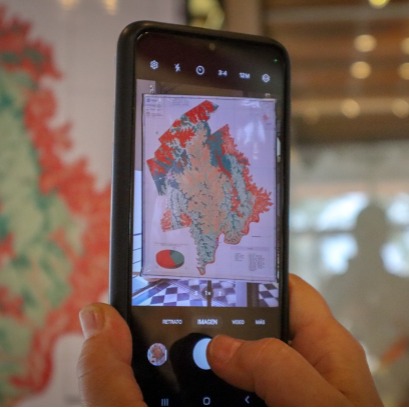
The Inta Soil Institute launched the Soil Information System (SISINTA), a platform that integrates more than 7,000 georeferenced soil profiles from all regions of the country. This digital, free and free access tool allows producers, technicians and decision makers to access precise and updated information on the characteristics and aptitudes of the soil in each territory.
Sisinta (www.visor.inta.gob.ar) combines field and laboratory data with geographical location, allowing searches to be performed by zone or specific attributes. Information can be organized in series or projects, downloading in different formats and being used in analysis software such as calculation forms, statistical tools or geographic information systems (GIS) .In the case of missions, the floor letters of the Guaraní and Leandro N. Alem departments were recently incorporated, with key information for productive planning. In Guaraní, more than 327,000 hectares were relieved, in a project that demanded two years of work and the participation of 30 professionals. Lucas Moretti, Doctor of Geological Sciences and project coordinator by INTA, he explained that this semi -talled cartography allows to calculate the productivity index of each plot depending on different crops. It is a great tool that the producer can access this resource digitally farm and see both the characteristic soils of their location as well as the recommendations for its management, to make decisions based on knowledge, he said. The Guaraní Department, in particular, presents geographical challenges due to its soils in mountain range and pronounced slopes. Thanks to digital maps, it is now possible to identify the different degrees of soil aptitude and their productive potentials with greater precision. With this tool, the INTA is committed to democratizing access to knowledge about Argentine soils, promoting a more efficient, sustainable and adapted agriculture adapted to the particularities of each territory.
IT MAY INTEREST YOU
 Nation reinforces prevention and training against forest fires
The director of the Federal Emergency Agency (AFE), Santiago Hardie, referred to the support that the Nation provides in fighting fires. He argued that the majority of igneous sources respond to human interventions and that, therefore, social awareness is a central tool to reduce environmental, material and human damage.
 The DNA of forests: they discover what makes a tree resist drought
An international team, with the participation of INTA and Conicet, discovered that genetics can be decisive for trees to better resist droughts
 Reforestation advances in the Historic Sanctuary of Machu Picchu with new restored hectares
The plan includes the planting of a thousand new trees in the sanctuary, in response to the damage caused by forest fires and environmental threats, with the support of local authorities and representatives of the tourism sector.