This is the Galician forest where the highest chestnuts in Europe grow
The place has centenary chestnut trees that reach 30 meters high and keeps in its shadows the memory of Emilia Pardo Bazán
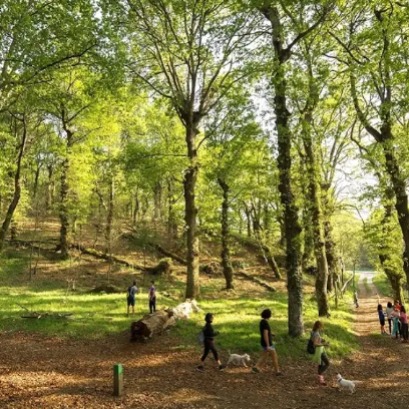
A few kilometers from the center of Lalín extends La Fraga de Catasós, also known as Carballeira de Quiroga. With an area of ??just 4.2 hectares, this mixed forest of oaks and chestnut trees represents one of the best examples of the Atlantic deciduous forest that once covered much of Galicia. But its value does not only reside in its natural beauty: La Fraga hosts the highest chestnuts in Europe, with specimens that reach 30 meters high and exceed five meters of perimeter. These trees, planted at the beginning of the 19th century, were cultivated with care to provide slender and resistant wood, ideal for the construction of pazos and large house beams. The chestnuts could only be branches, without deconating them, thus allowing vertical growth. The forest, declared a natural monument in 2000 and a natural space of local interest in 2017, has been protected by its ecological uniqueness and by the wealth of its biodiversity. Inside, the visitor can observe mosses, fungi, lichens and a rich fauna that includes insects, salamanders, frogs and even the scarce flying deer, an endangered beetle. It is said that in this inspiring enclave, surrounded by the high chestnuts and the calm of the forest, he wrote some chapters of his most emblematic novel, Los Pazos de Ulloa. Hence, the place is linked to the history of Galician literature. Today, La Fraga de Catasós is open to the public and has a 1.2 -kilometer path, perfect for a family walk. The route, well marked and full of informative panels, allows us to immerse yourself in the history and ecology of this unique forest. In addition, a small fenced plot serves as a didactic space to observe the evolution of species such as chestnuts, oaks and cherry trees.
IT MAY INTEREST YOU
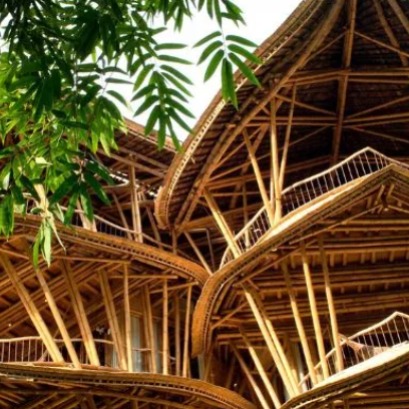 The South American country that changes construction thanks to an ancient, mega-resistant material: more than steel
This material that grows in South America creates the most resistant constructions and radically changes the world of architecture One particular building material has been used for millennia by various cultures in South America. This is due to its structural resistance that allows the creation of homes, bridges and shelters. Its archaeological presence shows that it was one of the most valued construction resources in seismic and humid areas.
 The discovery of methane-producing bacteria in trees rethinks the ecological role of forests
Pioneering study shows trees surprising internal microbial diversity and potential influence on global climate, driving novel strategies for agricultural and forestry management
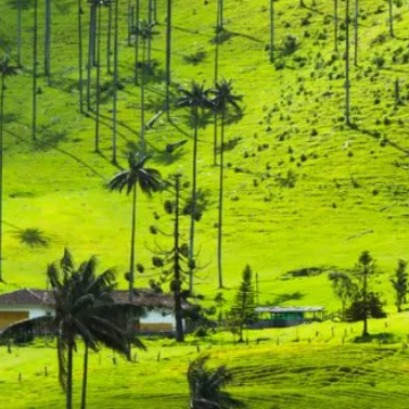 The tallest palm tree in the world is in South America: it is the height of a 20-story building
The worlds tallest palm tree stands deep in South America, a giant that challenges the limits of plant life Deep in South America, between the fog and the mountains, hides a giant tree that few know about. Majestic and silent, challenging the world on what plant life can achieve.