The threats that lurk to the oldest tree in the world
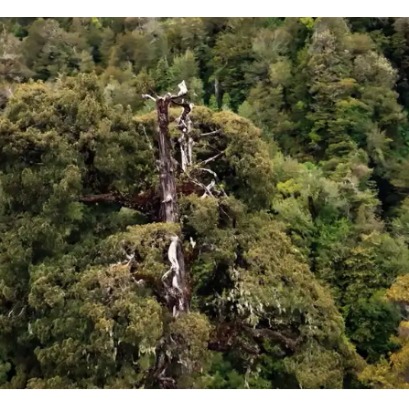
In the depths of a Chilean forest, the great grandfather stands, a tree of about 5,400 years. A highway project threatens its existence and that of the surrounding ecosystem. Empires have emerged and fallen, they have been born and fallen into oblivion languages, but this tree has resisted the passage of time: the great grandfather, around 5,400 years.
Jonathan Barichivich, a renowned Chilean scientist who works in France, grew in the rainy forest of Valdivia, who is now part of the Alerce Coastal National Park. His grandfather, Aníbal, discovered the great grandfather in 1972, while working as rangers. That moment, he says, changed the course of the history of his family and the tree. I said my first steps in this forest with my grandfather. He taught me the names of the plants even before I knew how to read, recalls Barichivich. The memories of my childhood are the fuel of my scientific passion. Forest, also known as Patagonian cypresses or fitzroya cuppressoids, not only manage to age more than many other trees. The species is also one of the most sensitive to climate trees. Each ring of its trunk is an annual meteorological record. The study of their rings allows researchers to rebuild climatic patterns that date back thousands of years ago. They are like encyclopedias, says Rocío Urrutia, a Chilean scientist who has been studying these trees decades. Their investigations have helped rebuild temperature records of 5,680 years ago. To determine the age of a tree, scientists of in statistical models that project the total number of rings, to reach an age range of the tree. The scientists also measure the amount of carbon that absorbs and emits the forest. The more the tree grows, the greater the space between the rings. And more growth means more carbon capture. These measurements are essential to understand how forests respond to global warming. Forests absorb approximately one third of our carbon emissions, explains Barichivich. But will it remain that way as the planet continues to heat up? Understanding how trees grow according to the different climatic patterns indicates how much carbon absorb, which is essential to predict if forests can continue to brake global warming in the warmest Threat to centenary trees. The authorities argue that the road would connect cities and boost tourism in the region. But there are critical voices that argue that this is, in reality, a smoke curtain. Connectivity is not the true reason, says Barichivich to DW, adds that there is another road nearby. But the new proposed road would link directly with the port of Corral, used by one of the largest cellulose exporters in Latin America. Muchos locals are convinced that the real objective is to open access to wood. The allerces are very valuable because of their lasting wood, high quality and straight growth. In addition, researchers such as Urrutia warn that, with the road, the risk of forest fires will increase. More than 90 percent of the regions fires begin near the roads, details. It is a worldwide phenomenon. In the Amazon, almost 75 percent of the fires begin less than five kilometers from a road, and, in the United States, 96 percent to less than 800 meters. Alerce is an endangered species, Urrutia warns. Each tree counts. A great fire could end the latest populations.
IT MAY INTEREST YOU
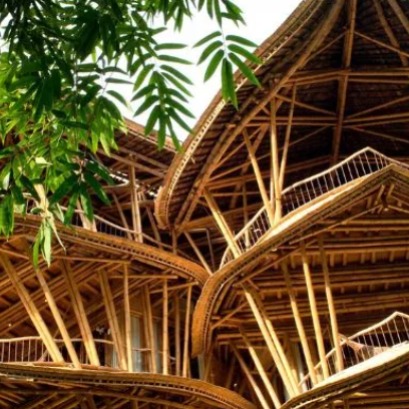 The South American country that changes construction thanks to an ancient, mega-resistant material: more than steel
This material that grows in South America creates the most resistant constructions and radically changes the world of architecture One particular building material has been used for millennia by various cultures in South America. This is due to its structural resistance that allows the creation of homes, bridges and shelters. Its archaeological presence shows that it was one of the most valued construction resources in seismic and humid areas.
 Native forest | In Misiones, controls are tightened on routes for illegal transport of native wood, logging of forests without permits and fraudulent digital guides
Informality in forestry activity in Misiones was once again evident, the culture of operating illegally is a historical problem, and the Ministry of Ecology and Renewable Natural Resources carries out the corresponding control and inspection operations in the regulation of productive activity and sustainable management for the use of native forests.
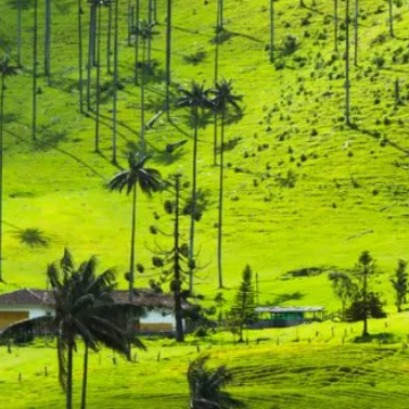 The tallest palm tree in the world is in South America: it is the height of a 20-story building
The worlds tallest palm tree stands deep in South America, a giant that challenges the limits of plant life Deep in South America, between the fog and the mountains, hides a giant tree that few know about. Majestic and silent, challenging the world on what plant life can achieve.