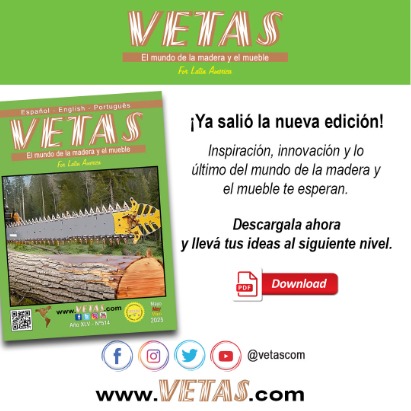
The new vein edition is already online: the future of furniture and wood is lived today
With the best of Interzum and Ligna 2025, this special edition invites you to discover the trends, technologies and opportunities that are redefining the industry.
The furniture and wood industry is changing. Interzum and Ligna 2025, two of the most important fairs in the world, marked a before and after in terms of technological innovation, sustainable materials and global design. And in veins, we bring you an exclusive summary with the highlights, analyzed from a regional perspective.In this new edition, we propose a reading that inspires, informs and connects. From success cases to new productive processes, through the digital transformation and the key role that Latin America can play in this new scenario.We have talent, resources and passion. It is time to boost regional collaboration, strengthen our value chains and bet on a more efficient, responsible and competitive industry.? Download it now and discovered the new edition of Vetas.? Following in social networks @vetascom so as not to miss any novelty.The future does not expect. Read veins and I know part of the change!
IT MAY INTEREST YOU
 The DNA of forests: they discover what makes a tree resist drought
An international team, with the participation of INTA and Conicet, discovered that genetics can be decisive for trees to better resist droughts
 The South American country that changes construction thanks to an ancient, mega-resistant material: more than steel
This material that grows in South America creates the most resistant constructions and radically changes the world of architecture One particular building material has been used for millennia by various cultures in South America. This is due to its structural resistance that allows the creation of homes, bridges and shelters. Its archaeological presence shows that it was one of the most valued construction resources in seismic and humid areas.
 Nation reinforces prevention and training against forest fires
The director of the Federal Emergency Agency (AFE), Santiago Hardie, referred to the support that the Nation provides in fighting fires. He argued that the majority of igneous sources respond to human interventions and that, therefore, social awareness is a central tool to reduce environmental, material and human damage.