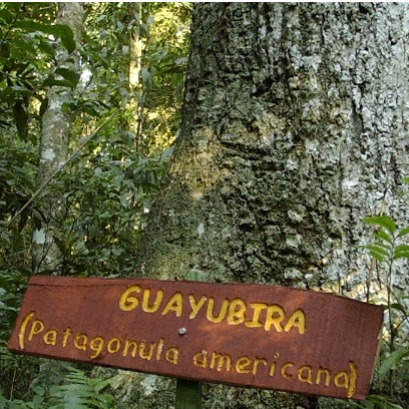
Know the Guayubira tree: one of the native timber species of the missionary jungle
With information from the Native Missions Species Manual (2024), developed in collaboration between the Faculty of Forest Sciences of the UNAM and the United States Forest Service (USFS) through the Project Update and Edition of the Wood Identification Manual of the Missionary Jungle, we share information from each digital tab that includes dendrological and anatomical characteristics. The manual was elaborated in the Wood, Dendrology and Dendrocronology Anatomy Laboratory (LAMDYD) of the Faculty of Forest Sciences in Eldorado, National University of Misiones.
Guayubira, a native species of great timber value, can reach up to 20 meters high. It has a dark and dense dura ideal for floors, furniture and sporting articles. Its wood, heavy and resistant. TECHNICAL CHARACTERISTICS OF THE GUAYUBIRANAN SCIENTIFIC TREE: American Cordia (L.) GOTTSCHLING J.S. Mill.Familia: Boraginacea Regionalenenening: ? Argentina: Guayubira ? Paraguay: Guajayvi Moroti ? Brazil: Guajuviradistribution Geographic Tree ? Wood color: Differentiated water and durable being the latter of dark brown color ? Growth rings: The growth rings are little demarcated ? Vaired: It is heavy to semi heavy wood, with a density of 0.80 gr/cm3. Generally in diameter less than 50 cm in adult state, it has important reinforcements in the base (image 6 and 7) ? Leaves: the leaves are alternate oblong or ovate of 3 to 8 cm long by 1 to 3 cm wide, the edges are undulating or sawn or sawn towards the roma apex and the base ahusada towards the short petiole. In diameter, the flowers are numerous and fragrant 5 mm long, the white corolla ? Fruit: The fruit is a 5 mm conical drup that divide the cortex into many rectangular and small plates. WOOD CHARACTERISTICS. soil and abroad lasts in natural state not treated approximately between 5 and 10 years. The duramen is not very resistant to the attack of fungi but resists the attack of insects not the sap.
IT MAY INTEREST YOU
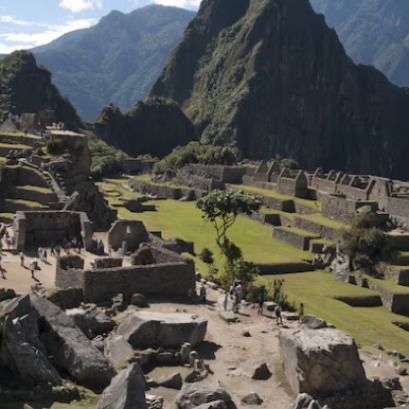 Reforestation advances in the Historic Sanctuary of Machu Picchu with new restored hectares
The plan includes the planting of a thousand new trees in the sanctuary, in response to the damage caused by forest fires and environmental threats, with the support of local authorities and representatives of the tourism sector.
 The discovery of methane-producing bacteria in trees rethinks the ecological role of forests
Pioneering study shows trees surprising internal microbial diversity and potential influence on global climate, driving novel strategies for agricultural and forestry management
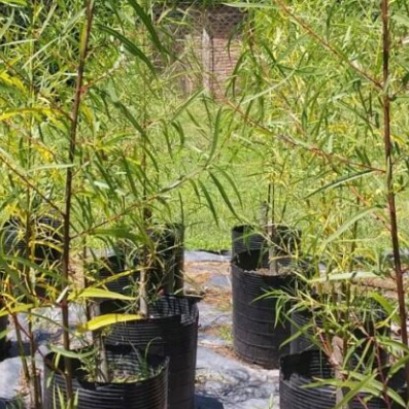 INTA Delta begins propagation of seven Creole willow clones for ecological restoration in Paraná
As a result of the rescue, domestication and registration work carried out by Teresa Cerrillo, a leading researcher in Salix Genetic Improvement, within the framework of the National Genetic and Forest Resources Programs of INTA, the multiplication and propagation of seven clones of Creole willow (Salix humboldtiana) began recently registered in the National Seed Institute (INASE) by INTA Delta del Paraná.