Forest Innovation: New Sauce clones drive the timber industry
A technological development based on genetic improvement allows to increase productivity, reduce harvest times and strengthen the sustainability of production in the Paraná Delta
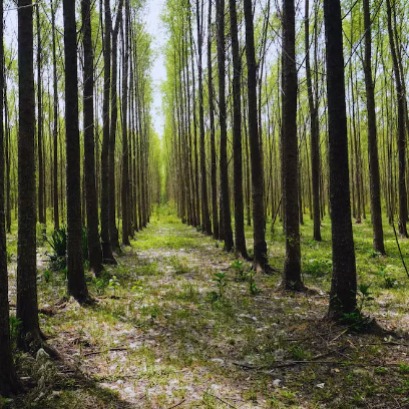
The Delta del Paraná is the epicenter of the production of willows in Argentina, and in that scenario, where the willows dominate the landscape and support one of the main productive chains of the country, a technological advance marks a before and after. Seis new clones developed by the INTA, in alliance with the private sector, combine quality, versatility and a production potential greater than traditional materials. This innovation not only strengthens the forestry industry, but also opens the path to a more efficient and sustainable forestry. Sauce and its key role in the industry Sauce (Salix spp.) It is a fundamental species in the forest economy of the Delta del Paraná. Its wood, appreciated for its whiteness, density and fiber quality, is key to the manufacture of paper and packaging. For more than two decades, INTA develops improved clones with higher attributes in growth, health and quality of wood. Now, with the industrial validation of six new clones ?Carapachay INTA-CEEF, the INTA-CIEF stream Paper, but they exceed it in the growth rate and righteousness of the shaft. This translates into greater productivity and efficiency in the use of wood. Sauce (Salix spp.) It is a fundamental species in the forest economy of the Delta del Paraná. Its wood, appreciated for its whiteness, density and fiber quality, is key to the manufacture of paper and packaging (INTA)
IT MAY INTEREST YOU
 The South American country that changes construction thanks to an ancient, mega-resistant material: more than steel
This material that grows in South America creates the most resistant constructions and radically changes the world of architecture One particular building material has been used for millennia by various cultures in South America. This is due to its structural resistance that allows the creation of homes, bridges and shelters. Its archaeological presence shows that it was one of the most valued construction resources in seismic and humid areas.
 Nation reinforces prevention and training against forest fires
The director of the Federal Emergency Agency (AFE), Santiago Hardie, referred to the support that the Nation provides in fighting fires. He argued that the majority of igneous sources respond to human interventions and that, therefore, social awareness is a central tool to reduce environmental, material and human damage.
 The DNA of forests: they discover what makes a tree resist drought
An international team, with the participation of INTA and Conicet, discovered that genetics can be decisive for trees to better resist droughts