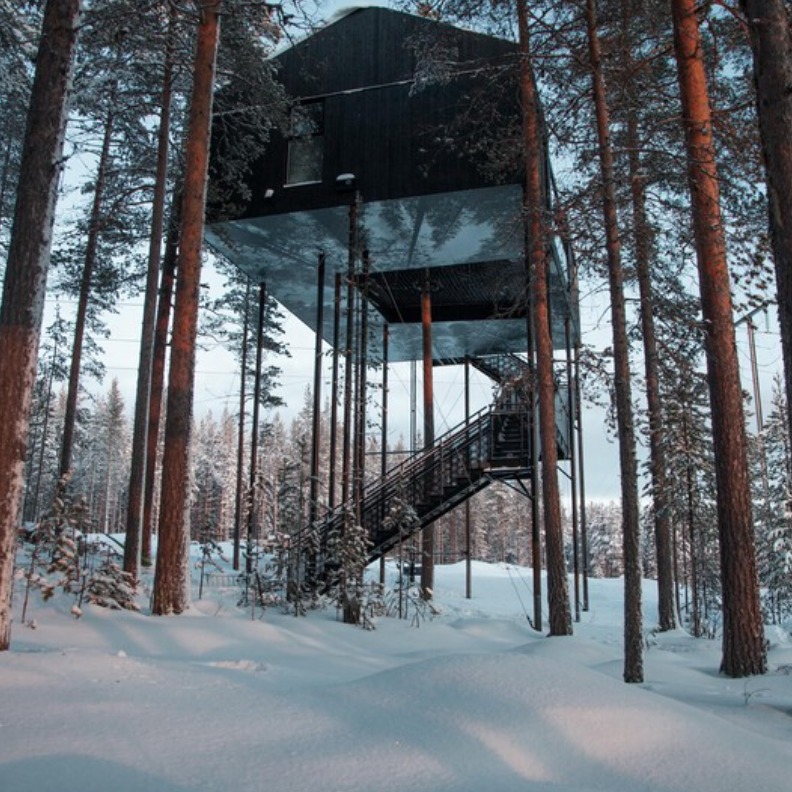
Build between branches: a sample of contemporary architecture of houses in the trees
Despite their capricious appearance, houses in the trees offer a unique platform for structural innovations and design explorations.
In fact, houses in traditional trees depend on the trunks of the trees for structural support, but, to relieve the load supported by the tree, contemporary projects often introduce complementary systems such as piles seeking to maintain their image while offering additional support. One of the main advantages of raising them in this way is the reduction of the environmental footprint. Houses on trees can be designed to leave the soil of the intact forest, preserving small -scale ecosystems. By releasing the ground below, they minimize native flora and fauna interruptions, allowing nature to prosper without being disturbed. Similarly, many architecture professionals use local topography to create fluid connections, incorporating ramps, stairs or bridges that are integrated with the landscape. These solutions not only improve accessibility, but also enrich the general experience creating an architectural walk that extends between the house in the tree and its surroundings. This sensitivity to the environment is reflected not only in structural design, but also in the careful selection of materials. The use of natural materials such as wood, also helps the structure merge with its environment. Some designers have gone further using alternative materials such as mirror panels to reflect the surrounding forest and completely hide the presence of the house in the tree, demonstrating that the choice of material can contribute to creating a project that feels like an extension of its environment instead of an imposition on it. This collection highlights notable examples from Sweden, Denmark, Indonesia and France, showing its various approaches.
IT MAY INTEREST YOU
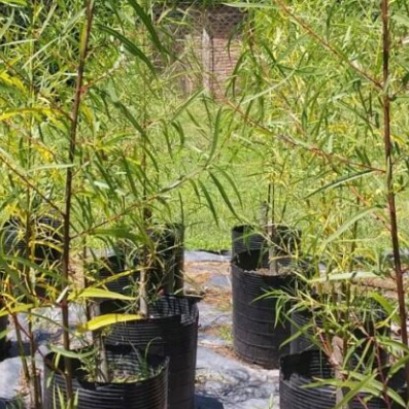 INTA Delta begins propagation of seven Creole willow clones for ecological restoration in Paraná
As a result of the rescue, domestication and registration work carried out by Teresa Cerrillo, a leading researcher in Salix Genetic Improvement, within the framework of the National Genetic and Forest Resources Programs of INTA, the multiplication and propagation of seven clones of Creole willow (Salix humboldtiana) began recently registered in the National Seed Institute (INASE) by INTA Delta del Paraná.
 Nation reinforces prevention and training against forest fires
The director of the Federal Emergency Agency (AFE), Santiago Hardie, referred to the support that the Nation provides in fighting fires. He argued that the majority of igneous sources respond to human interventions and that, therefore, social awareness is a central tool to reduce environmental, material and human damage.
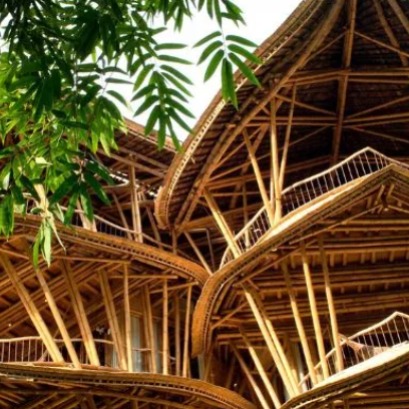 The South American country that changes construction thanks to an ancient, mega-resistant material: more than steel
This material that grows in South America creates the most resistant constructions and radically changes the world of architecture One particular building material has been used for millennia by various cultures in South America. This is due to its structural resistance that allows the creation of homes, bridges and shelters. Its archaeological presence shows that it was one of the most valued construction resources in seismic and humid areas.