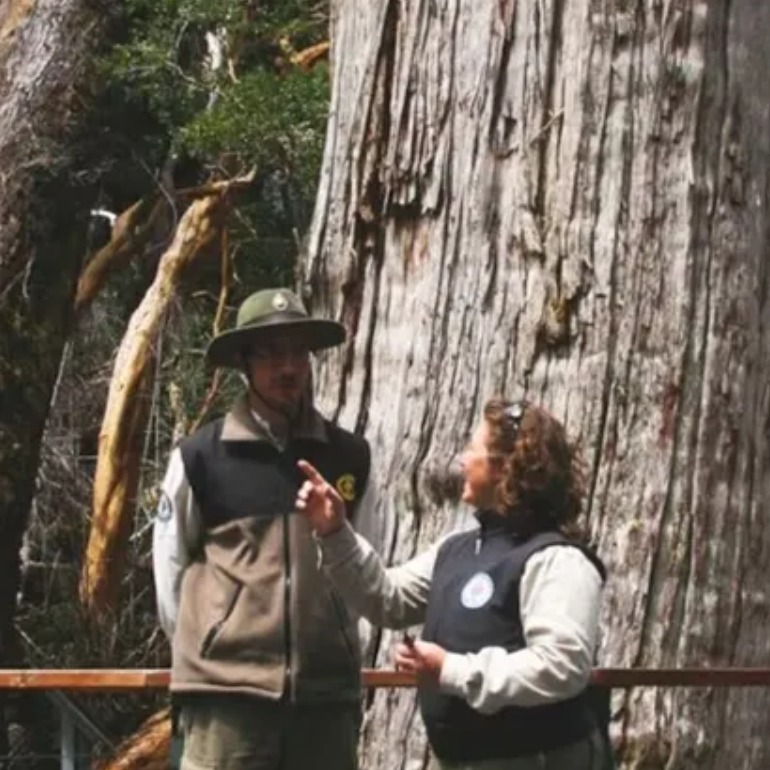
In Chubut is the second oldest tree in the world: he is 2,630 years old
It is located in Los Alerces National Park, a short distance from Esquel. Thousands of tourists from all over the world arrive every year to meet him. In the lands of the current Los Alerces National Park, located in the province of Chubut, a short distance from the city of Esquel, about 2,630 years ago the offspring of a tree that still stands, imposing. This is the Alerce Abuelo, the oldest tree in Argentina and the second worldwide, a wonder of Argentine Patagonia.
It is not a mysterious exemplary lost in a hidden place. While it is in an aggregate place with virgin land, the place where it gets up is easy to access and every year tens of thousands of local tourists and the most diverse places on the planet make the excursion to meet this tree that is more years old that the Christian era. One of the keys to survive climatic changes, natural phenomena, eruptions of nearby volcanoes or fires, it is its geographical location.A Almost 40 kilometers on routes 259 and 71. Then you have to continue the route inside the park, navigate about an hour and take an accessible walk that has been about 60 minutes, until you meet the ancestor grandfather. From the catwalk that crosses the Río Arrayanes, at the mouth of the Green Lake, it is necessary to walk about a thousand meters to reach Puerto Chucao. In that place will be waiting for the catamaran that will navigate through the green waters of Lake Menéndez, until finally reaching the allerzal: the forest in which the allerces coexist with arrayanes, lianas and wild orchids, on the banks of the Swan River. Among all the allerces, The grandfather stands out with its 57 meters high and impressive 280 centimeters in diameter. It is the second longest certified tree on the planet, behind the Pinus Longeva found in the United States. The antiquity of the trees is calculated by telling the amount of rings in its trunk. Every year, two new rings appear in its wood, one in spring and one in autumn. The mechanism used is to perforate a drilling to the center of the trunk and extract a thin wooden rod that serves as a sample, without producing damage to the specimen So it was possible to establish that Esquels Alerce Grandfather is over 2,600 years old, which lived, for example, with 10 generations of arrayanes; 400 generations of condors and 87 generations of huemules, and that survived climate change, protected by the Andes mountain range, and a practically unexplored forest. Unescolos native villages of the region called Lahuan Aller, an expression that means ? Lonely grandfather ?, because he endured standing in the forest while another hundreds of specimens fell to his side. Most of the 263,000 hectares of Los Alerces National Park is virgin territory, without routes, or electrical energy. Approximately 70% of its territory, about 188,000 hectares, was distinguished as a world heritage by UNESCO in 2018, due to its high degree of preservation. Only about 300 parks around the world have that certification. The flora and the fauna of these forests dates back to the times when the continents were united, they explain in the National Park. The formation of the allerces forest was a slow process, favored by The special moisture atmosphere: in the allerzal it rains 300 days per year. Under these conditions, each tree grows a millimeter in diameter every 365 days. Thus, the millenary Alerce Abuelo rises as a symbol of conservation in protected places of the destruction of man.
IT MAY INTEREST YOU
 Color the streets pink and white in spring: which is the most beautiful tree in the world and why, according to AI
Its delicate branches, the soft tones of its petals and the harmonious shape of the tree make it an almost poetic image.
 The DNA of forests: they discover what makes a tree resist drought
An international team, with the participation of INTA and Conicet, discovered that genetics can be decisive for trees to better resist droughts
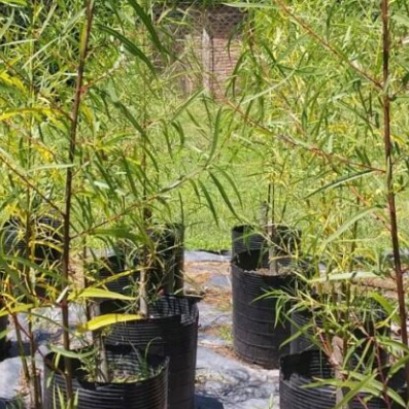 INTA Delta begins propagation of seven Creole willow clones for ecological restoration in Paraná
As a result of the rescue, domestication and registration work carried out by Teresa Cerrillo, a leading researcher in Salix Genetic Improvement, within the framework of the National Genetic and Forest Resources Programs of INTA, the multiplication and propagation of seven clones of Creole willow (Salix humboldtiana) began recently registered in the National Seed Institute (INASE) by INTA Delta del Paraná.