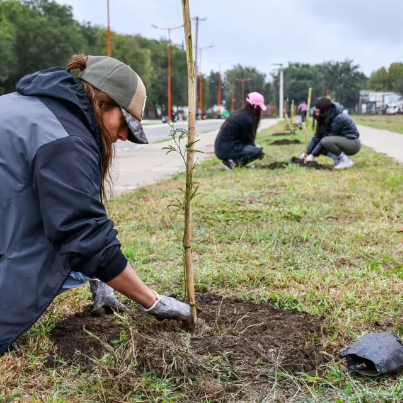
Se realizo una forestacion de 1.000 arboles autoctonos en Santa Maria de Punilla
El Ministerio de Ambiente y Economia Circular llevo a cabo una forestacion de 1.000 arboles en la localidad de Santa Maria de Punilla, como parte de las acciones de compensacion en el marco del Festival Cosquin Rock.
A traves del programa Mas Flora Cordobesa,
se plantaron especies autoctonas de arboles y plantas como algarrobos,
espinillo, cina cina y tala, con el objetivo de fortalecer la biodiversidad en
las cercanias al predio, otorgando densidad y variedad a la flora nativa.
La ministra Victoria Flores participo del
encuentro, junto a Jose Palazzo y parte del equipo de la cartera ambiental.
Cabe recordar que el ministerio de Ambiente
y Economia Circular coordino diferentes estrategias junto al equipo de
organizacion del Festival y al ministerio de Infraestructura y Servicios
Publicos, para convertir al Cosquin Rock en un evento sustentable.
Entre las principales acciones, se
encuentra el convenio que firmo entre la Provincia, el municipio de Santa Maria
de Punilla y la empresa Helios Energia Limpia, para gestionar los residuos
organicos que se generen durante el festival.
A partir de esto, todos los desechos fueron
trasladados a establecimientos que los convirtieron en biogas, energia
electrica y biofertilizante. El traslado se realizo utilizando camiones con
100% de biocombustible.
Ademas, el equipo tecnico de la cartera
ambiental estuvo presente en el espacio “Ecosquin�, con actividades de
promocion ambiental, productos de la economia circular, juegos.

IT MAY INTEREST YOU
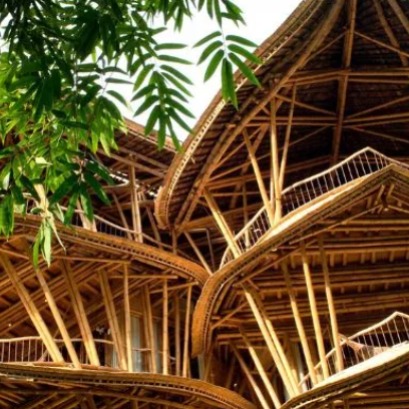 The South American country that changes construction thanks to an ancient, mega-resistant material: more than steel
This material that grows in South America creates the most resistant constructions and radically changes the world of architecture One particular building material has been used for millennia by various cultures in South America. This is due to its structural resistance that allows the creation of homes, bridges and shelters. Its archaeological presence shows that it was one of the most valued construction resources in seismic and humid areas.
 INTA Delta begins propagation of seven Creole willow clones for ecological restoration in Paraná
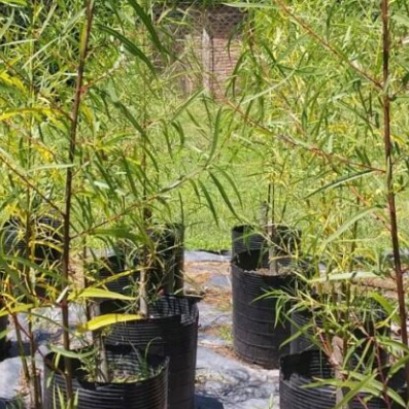
As a result of the rescue, domestication and registration work carried out by Teresa Cerrillo, a leading researcher in Salix Genetic Improvement, within the framework of the National Genetic and Forest Resources Programs of INTA, the multiplication and propagation of seven clones of Creole willow (Salix humboldtiana) began recently registered in the National Seed Institute (INASE) by INTA Delta del Paraná.
 Nation reinforces prevention and training against forest fires
The director of the Federal Emergency Agency (AFE), Santiago Hardie, referred to the support that the Nation provides in fighting fires. He argued that the majority of igneous sources respond to human interventions and that, therefore, social awareness is a central tool to reduce environmental, material and human damage.