Reforestation with native plants in Patagonia Park
In an arduous task that combines effort, dedication and love for nature, Guadalupe Nieto successfully led the reforestation of the Planetarium in Patagonia Park. The challenges, achievements and passion that motivated this project
The main objective of the reforestation was to restore the natural scenery around the planetarium, which had been affected by construction. "Preventing erosion and bringing life back to the landscape," as Guadalupe Nieto describes it, became the project's mission.
Before getting to work, the team carried out a thorough reconnaissance of the terrain. "We toured the space, recognized the species that were there and how they were naturally distributed," she explained.
Thus, for the replanting they selected coirones, senecios and molles. “These species have different heights, which favors soil coverage in different strata, in addition to being food for native fauna. Some of them are also edible and medicinal,” explains Guadalupe. This reforestation work covered not only the ground around the planetarium, but also the roof and side slopes, to minimize the visual impact on the landscape.
Of course, the task was not without challenges. "First of all, we faced the difficulties of the terrain, since in some areas the soil was very compact due to the presence of stones and gravel." Furthermore, the lack of an installed irrigation system required additional effort to ensure the survival of the transplanted species.
“That was, to be honest, a job that took us a long time.” Neither the wind, the cold, the swirls of sand, the sun, nor the extreme heat of the last day stopped them. “The priority was to guarantee the survival of the transplanted plants and ensure that they have enough water and abundant irrigation. “It was six days of hard work.”
“The personal experience of this job was very positive,” he explains. “It was a great challenge on a personal level and on a team level. Guadalupe thanks Walter Lobos from the town of Los Antiguos, Cristhian Muñoz from Perito Moreno, and her children, Yamila, Nazarena and Elal. “Between the six of us we were able to carry out the reforestation in the Planetarium at the Patagonia Park portal. Being responsible for the task, seeing how it turned out and how those plants and species are going to grow, fills us with pride.”
Guadalupe is motivated by a deep respect and connection with her territory. “I think knowing what the land where I live has is crucial for me.” Her commitment goes beyond planting trees; she seeks to understand the history of the plants in that soil, their purpose and how to preserve them.
Her experience on the family farm allows her to share knowledge in workshops for children and families. For a decade, Guadalupe has been dedicated to collecting senecio seeds and producing molle seedlings for reforestation. In addition, it holds workshops for children and families “to tell them about the native flora, so that they can plant a tree in the place, molles, above all, and take it to their home, their garden, or some place they choose in the town and also tell them a little about how these plants are used in natural medicine, what they are for, what they heal and so on” as a way to continue transmitting biocultural wealth and counteract the loss of ancestral practices in their community.
"You have to take the time, get to know the plants and it is through trial and error that you learn," she confesses.
This project has not only transformed the environment of the Patagonia Park Planetarium, but also highlights the importance of the preservation of native species and the local community's commitment to environmental sustainability. Guadalupe Nieto's story is an inspiring example of how dedication can shape a greener, more sustainable future.

IT MAY INTEREST YOU
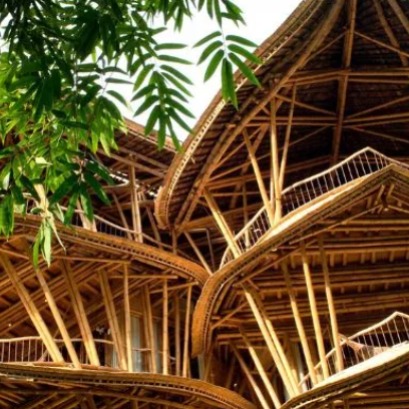 The South American country that changes construction thanks to an ancient, mega-resistant material: more than steel
This material that grows in South America creates the most resistant constructions and radically changes the world of architecture One particular building material has been used for millennia by various cultures in South America. This is due to its structural resistance that allows the creation of homes, bridges and shelters. Its archaeological presence shows that it was one of the most valued construction resources in seismic and humid areas.
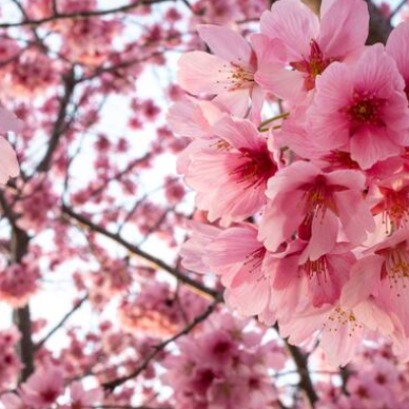 Color the streets pink and white in spring: which is the most beautiful tree in the world and why, according to AI
Its delicate branches, the soft tones of its petals and the harmonious shape of the tree make it an almost poetic image.
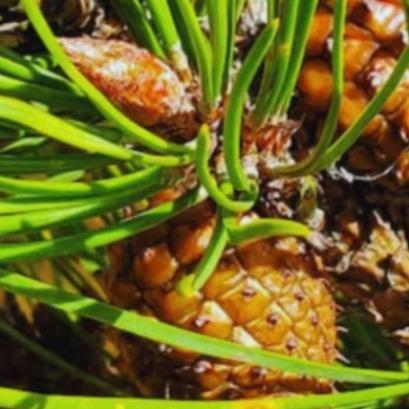 The DNA of forests: they discover what makes a tree resist drought
An international team, with the participation of INTA and Conicet, discovered that genetics can be decisive for trees to better resist droughts