Pine resin | Innovation and development of a dynamic activity with high productivity in Argentine Mesopotamia
“In the last 10 years, production has been experiencing growth that is worth highlighting, both in production, export, and with innovation processes in extraction and harvest techniques, as well as in international marketing,” the producer and forestry consultant Matias Gyukits
The production of pine resin is an activity that is growing and developing in Argentina and worldwide. It is modernizing and is on its way to taking a leading role in replacing oil. The country is not only growing in area, it is also attracting forestry and industrial investments.
Pine resin has immemorial records of its use. It is documented that Noé already used it to waterproof his boat. In Argentina it has not yet existed for a century and in the last 10 years they have experienced growth that is worth highlighting.
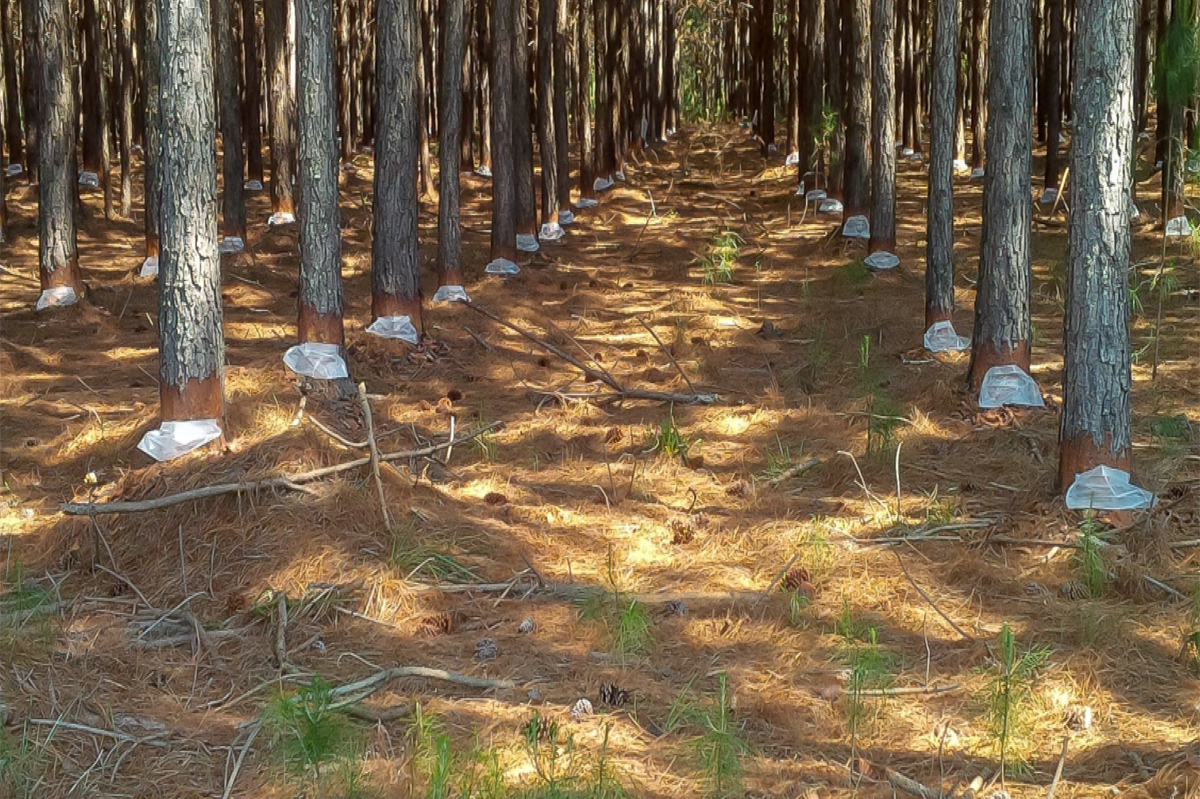
According to official data published by ArgentinaForestal.com in 2022, the resin sector in Corrientes registered a total of 12 million Pinus elliottii plants to reach an annual production of 35,000 tons of miera, and generates 3,000 direct jobs in the rural area, and AFoA Corrientes estimated the possibility of the province's forestry sector at least doubling production in the next five or seven years.
The resin sector is an important link in terms of exports, in 2021 it exported a total of USD 45 million between resin, rosin and turpentine products. This represented an increase of more than 130% considering the amounts exported in 2020, which were USD 19 million. Clearly, these numbers demonstrate that the resin sector has an important participation in the sector's exports.
Between Corrientes and Misiones (to a lesser extent), there would be a total of 20 companies dedicated to the extraction of resins.
The advantages of Argentine resin
You can read in the specialized media as in other regions how innovations are achieved and how the activity is modernized. And in this aspect Argentina is not far behind.
While in China and Europe the activity is reducing in area, in South America, especially in Brazil and even more in Argentina, it is growing in area and quantity, as well as improving its productivity day by day.
In China, the value of labor no longer makes the production of pine resin economically viable, and production areas are gradually leaving, which leads Chinese factories to look for raw resin in the rest of the world, and they find in Argentina a quality resin at competitive prices.
We might think that labor in Argentina is cheaper than in China. Could be. In Brazil surely not. What determines South America's competitiveness in the international resin market is not its low absolute costs, which they are not, but its high productivity and a dynamic that allows it to capture added value.
And productivity in Argentina is even higher than in Brazil. The trees produce more thanks to years of research and development of super-resinous trees that INTA achieved together with the private sector, and practically duplicate Brazilian genetics.
Labor productivity is higher in South America, because extraction techniques are more efficient.
Logistics is even more efficient in Argentina than in Brazil, given that the system has specialized transportation.
Innovations underway
You can also read in the specialized media that innovations appear in other countries to reduce costs, increase production or improve quality. In this, the sector in Argentina is not far behind, only that several of these innovations will probably not be able to appear in publications open to the general public, given that the institutional framework does not protect intellectual property as in other countries.
Just as in Brazil a machine has been developed to speed up the picks, in Argentina a machine with an explosion engine was developed to improve the desroñado, which allows greater daily production and with very important improvements in the ergonomics of the task.
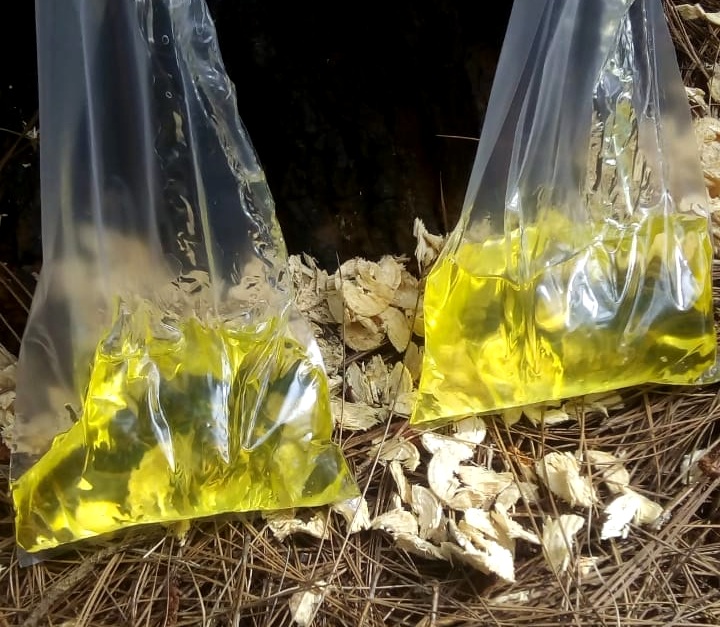
Progress is also being made with good results, not yet completely satisfactory, in new extraction techniques, which allow harvesting without foreign elements such as leaves, peel or dirt, in addition to raising the quality of the resin, as well as the turpentine content, directly raising the value of the harvested product.
Although this technique is taken from a Paper from a University in the United States, the implementation, testing and improvements have been done silently by private companies in Argentina, and not in Brazil for example.
Another commercial innovation is the appearance on the world market of resin for string instruments developed by a businesswoman who until now was outside the sector. Very important achievement for the sector, demonstrating that not only does it have a future as a commodity, but it is also possible to develop low-scale specialties aimed at demanding, high-value markets and uses.
If this example is imitated by local entrepreneurs it undoubtedly meant more value added at origin, more local labor dedicated to products with very high added value and a substantial contribution to local development.
Little ideas: hair removal wax uses 80% pine resin. The glue on the bottle labels is practically pine resin.
What other innovative use can be given to these products or what specific demand for natural products can be covered with this in local or international markets?
Industry and industrialization are not far behind either. More and more companies are investing in production lines a few kilometers from production areas. Even thanks to public-private collaborations, they developed production lines for a second transformation of turpentine, which is one of the derivatives of pine extract.

IT MAY INTEREST YOU
 Nation reinforces prevention and training against forest fires
The director of the Federal Emergency Agency (AFE), Santiago Hardie, referred to the support that the Nation provides in fighting fires. He argued that the majority of igneous sources respond to human interventions and that, therefore, social awareness is a central tool to reduce environmental, material and human damage.
 Native forest | In Misiones, controls are tightened on routes for illegal transport of native wood, logging of forests without permits and fraudulent digital guides
Informality in forestry activity in Misiones was once again evident, the culture of operating illegally is a historical problem, and the Ministry of Ecology and Renewable Natural Resources carries out the corresponding control and inspection operations in the regulation of productive activity and sustainable management for the use of native forests.
 The South American country that changes construction thanks to an ancient, mega-resistant material: more than steel
This material that grows in South America creates the most resistant constructions and radically changes the world of architecture One particular building material has been used for millennia by various cultures in South America. This is due to its structural resistance that allows the creation of homes, bridges and shelters. Its archaeological presence shows that it was one of the most valued construction resources in seismic and humid areas.