More wood | The UN calls for more political support in countries to encourage the adoption of renewable bio-based materials
A report published this Tuesday by the United Nations Environment Program (UNEP) and the Yale Center for Ecosystems + Architecture (Yale CEA), within the framework of the Global Alliance for Building and Construction (GlobalABC), offers solutions to decarbonize the building and construction sector and reduce waste. generate. “The change points to renewable bio-based construction materials of ethical and sustainable origin, including wood, bamboo and biomass,” the UN says.
Nairobi, 12 September 2023 – Rapid urbanization around the world means that every five days the world is adding buildings equivalent to the size of Paris, and the built environment sector is already responsible for 37 percent of global emissions.
A report published this Tuesday by the United Nations Environment Program (UNEP) and the Yale Center for Ecosystems + Architecture (Yale CEA), within the framework of the Global Alliance for Building and Construction (GlobalABC), offers solutions to decarbonize the building and construction sector and reduce waste. generate.
The report, “Building Materials and Climate: Building a New Future,” offers policymakers, manufacturers, architects, developers, engineers, builders and recyclers a three-pronged solution to reduce “embodied carbon” emissions and negative impacts on climate. the natural ecosystems of the production and deployment of construction materials (e.g., cement, steel, aluminum, wood, biomass):
• Avoid waste through a circular approach: building less by reusing existing buildings is the most valuable option, generating 50 to 75 percent fewer emissions than new construction; promote construction with fewer materials and with materials that have a lower carbon footprint and facilitate reuse or recycling.
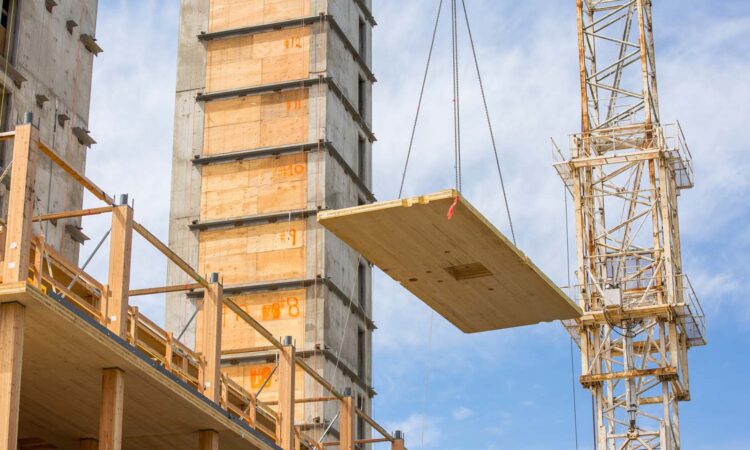
• Shift to ethically and sustainably sourced renewable bio-based building materials, including wood, bamboo and biomass. The shift towards properly managed bio-based materials could lead to compound emissions savings in many regions of up to 40 percent in the sector by 2050. However, more political and financial support is needed to ensure widespread adoption of construction Renewable bio-based materials.
• Improve decarbonization of conventional materials that cannot be replaced. This mainly concerns the processing of concrete, steel and aluminum (three sectors responsible for 23 percent of current global emissions), as well as glass and bricks. Priorities should be given to electrifying production with renewable energy sources, increasing the use of reused and recycled materials, and expanding innovative technologies. The transformation of regional markets and construction cultures is essential through building codes, certification, labeling and the education of architects, engineers and builders on circular practices.
• The triple “avoid-change-improve”
• A solution needs to be adopted throughout the construction process to ensure that emissions are reduced and human health and biodiverse ecosystems are protected.
• The solution also requires, in its implementation, sensitivity to local cultures and climates, including the common perception of concrete and steel as modern materials of choice.
• “Until recently, most buildings were constructed from locally sourced earth, stone, wood and bamboo. However, modern materials like concrete and steel often only give the illusion of durability, often ending up in landfills and contributing to the growing climate crisis,” said Sheila Aggarwal-Khan, director of the Division of Industry and UNEP Economics.
• “Net zero in the building and construction sector can be achieved by 2050, provided governments put in place the right policies, incentives and regulation to bring about a change in industry action,” she added.
• To date, most climate action in the construction sector has been dedicated to effectively reducing “operational carbon” emissions, which encompass heating, cooling and lighting.
• Thanks to the growing global decarbonization of the electrical grid and the use of renewable energies, these will decrease from 75 percent to 50 percent of the sector in the coming decades.
• Case studies from Canada, Finland, Ghana, Guatemala, India, Peru and Senegal demonstrate how decarbonization occurs using “Avoid-Change-Improve” strategies: developed economies can devote resources to renovating existing old buildings, while that emerging companies can exceed carbon emissions. -Intensive construction methods using alternative construction materials with low carbon emissions.
• Cities around the world can drive the implementation of decarbonization. Many are already integrating vegetated surfaces, including green roofs, facades and interior wall assemblies to reduce urban carbon emissions and cool buildings, increase urban biodiversity and more.
•
• Since buildings contain materials produced in different regions
.jpg)

IT MAY INTEREST YOU
 The tallest palm tree in the world is in South America: it is the height of a 20-story building
The worlds tallest palm tree stands deep in South America, a giant that challenges the limits of plant life Deep in South America, between the fog and the mountains, hides a giant tree that few know about. Majestic and silent, challenging the world on what plant life can achieve.
 The DNA of forests: they discover what makes a tree resist drought
An international team, with the participation of INTA and Conicet, discovered that genetics can be decisive for trees to better resist droughts
 Nation reinforces prevention and training against forest fires
The director of the Federal Emergency Agency (AFE), Santiago Hardie, referred to the support that the Nation provides in fighting fires. He argued that the majority of igneous sources respond to human interventions and that, therefore, social awareness is a central tool to reduce environmental, material and human damage.