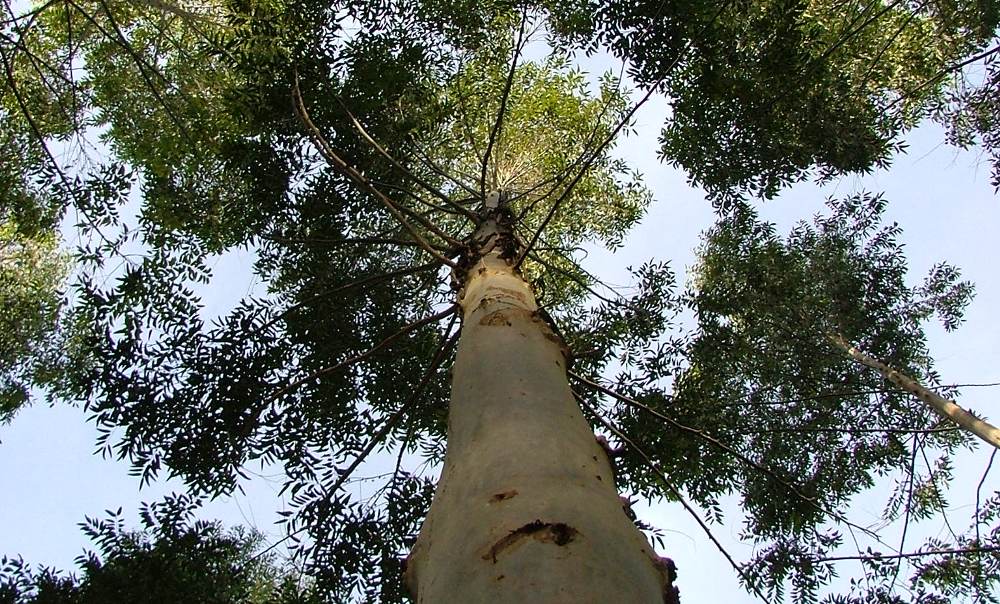
The exotic eucalyptus
The agronomist engineer and forestry-industrial consultant Daniel Maradei introduces himself into the debate on the species
"The important thing is not about defining the origin or provenance, nor the name that the crop adopts, the important thing is to plant it in suitable places and, fundamentally, to generate the work that our beloved Argentina needs so much," he reflects.
In the geological age in which we live, Eucalyptus and related species such as Corymbia have a natural distribution limited to Australia, with a few species growing naturally in Timor, Papua, New Guinea and the Philippines.
But it turns out that when the Roman surgeon Joaquín Frenguelli arrived in Argentina, like his friend and compatriot the entomologist Lamberto Golfari, they were passionate about paleontology. This is how in 1932 Frenguelli, in one of his numerous expeditions, found fossil remains at the confluence of the Limay and Traful rivers that turned out to belong to: oh surprise, EUCALYPTUS leaves and fruits!
More recently in Laguna del Hunco, in the province of Chubut, Gandolfo with a team of researchers from Argentina and the United States, including María A. Gandolfo and Elizabeth Hermsen -from Cornell University- in 2009 collected fossils, including fruits, structures of the branches on which the fruits were sustained, three buds and a flower.
In the meticulous analysis carried out after the discovery, specialists from the Pennsylvania State University, the Museum of Nature and Science in Denver, the University of Buenos Aires and the E. Feruglio Paleontological Museum of Argentina have also participated.
The identification of these fossils dating back 51.9 million years makes them the oldest scientifically validated eucalyptus macrofossils, and the only ones conclusively recognized as native to a territory outside of Australia.
The age and affinities of the fossils also indicate that the Eucalyptus subgenus Symphyomyrtus is older than previously assumed. Paleoecological data indicate that Patagonian eucalyptus dominated volcanically disturbed areas adjacent to standing rainforest surrounding an Eocene caldera lake. More than 12 million hectares of eucalyptus have now been planted worldwide, many of them in semi-arid regions. And there are no new deserts reported.
Another of the sterile discussions that arises from the same problem is the name of the crop. Is it an implanted forest, a mount, a forest cultivation?
Subsequent expeditions and studies, including with the participation of the Department of Ecology, Genetics and Evolution of the University of Buenos Aires (UBA), have confirmed that the materials are similar to the current Eucalyptus, sharing similarities with the closely related genus Corymbia.
So it is worth asking, are they exotic or native? Were they, are they or will they be?
Is an Araucaria angustifolia planted in Montecarlo, Misiones, native or exotic?
Hasn't the time come to put into practice that apothegm expressed years ago that you have to stop talking about trees, grab a shovel and start planting them?
The important thing is not about defining the origin or provenance, nor the name that the crop adopts, the important thing is to plant it in suitable places, so that it continues to be the most efficient manageable element of nature in sequestering atmospheric carbon, to avoid soil erosion, to protect other crops, to supply the multiple forest industries that add value to the wood and, fundamentally, to generate the work that our beloved Argentina needs so much.

IT MAY INTEREST YOU
 Color the streets pink and white in spring: which is the most beautiful tree in the world and why, according to AI
Its delicate branches, the soft tones of its petals and the harmonious shape of the tree make it an almost poetic image.
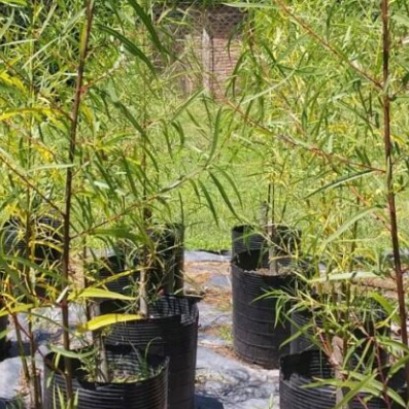 INTA Delta begins propagation of seven Creole willow clones for ecological restoration in Paraná
As a result of the rescue, domestication and registration work carried out by Teresa Cerrillo, a leading researcher in Salix Genetic Improvement, within the framework of the National Genetic and Forest Resources Programs of INTA, the multiplication and propagation of seven clones of Creole willow (Salix humboldtiana) began recently registered in the National Seed Institute (INASE) by INTA Delta del Paraná.
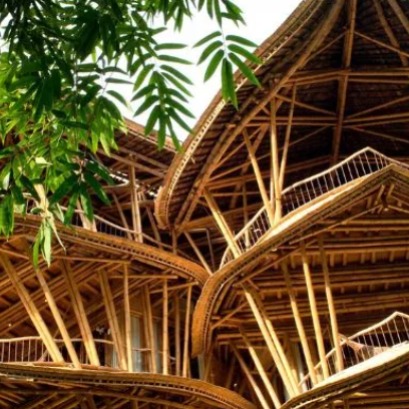 The South American country that changes construction thanks to an ancient, mega-resistant material: more than steel
This material that grows in South America creates the most resistant constructions and radically changes the world of architecture One particular building material has been used for millennia by various cultures in South America. This is due to its structural resistance that allows the creation of homes, bridges and shelters. Its archaeological presence shows that it was one of the most valued construction resources in seismic and humid areas.