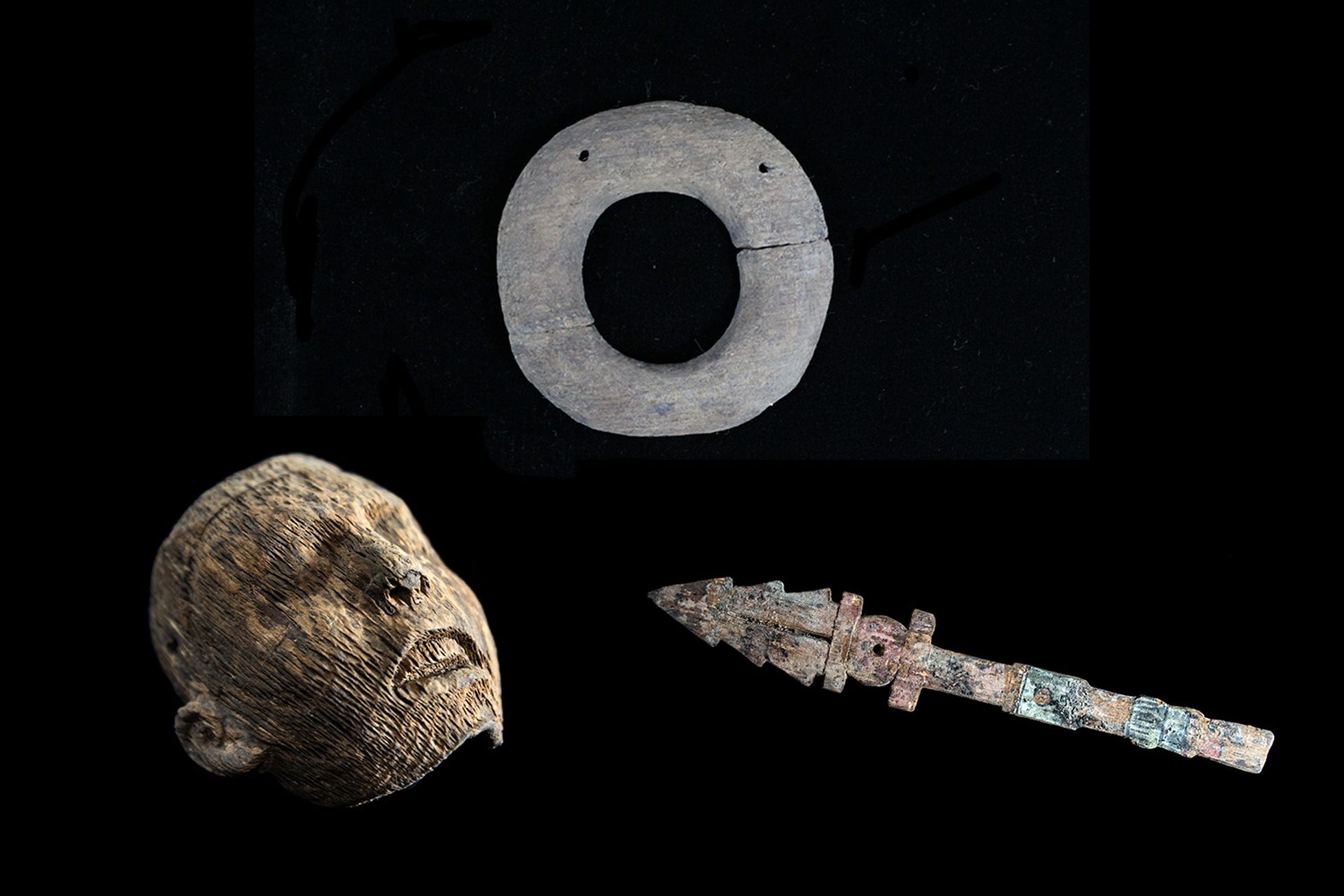
The 2,550 wooden objects recovered for the first time from the offerings of the Templo Mayor of Tenochtitlan
Archaeologists, restorers and specialists have managed to rescue objects that have survived more than 500 years submerged in water, some completely flooded. It is a true feat of science dedicated to the conservation of these materials
So far, there are 2,550 wooden pieces that archaeologists, restorers and specialists have managed to rescue from the extraordinary offerings found at the foot of the Great Temple of old Tenochtitlan: darts, dart throwers, pectorals, earrings, masks, ornaments, earmuffs, sceptres, jars, headdresses, a representation of a flower and another of bone, all found in the ritual deposits made by the priests to consecrate a building or make a request to the Aztec gods. This is a true feat of science dedicated to the conservation of these naturally delicate plant materials. The objects have survived more than 500 years submerged in water, some completely submerged.
A high and constant level of humidity, little oxygen and light, as well as minimal temperature fluctuations, contributed to the preservation of the organic remains to this day. While, a modern method of conservation and stabilization, in which synthetic sugars are used (lactitol and, later, trehalose) - a technique used for the first time in Mexico, in 2002, by the restorer Alejandra Alonso, who carried out the stabilization of the wooden artifacts from Offering 102 in the Templo Mayor — will be preserved for this and future generations to see. Due to their natural vulnerability, the preservation of the wooden objects in the offerings located at the foot of the spiritual center of the Mexica is considered exemplary.

IT MAY INTEREST YOU
 The city in South America that breathes thanks to a thousand olive trees planted in the 17th century
In the heart of South America there is a city that, among the noise and concrete, still breathes thanks to an olive forest
 Reforestation advances in the Historic Sanctuary of Machu Picchu with new restored hectares
The plan includes the planting of a thousand new trees in the sanctuary, in response to the damage caused by forest fires and environmental threats, with the support of local authorities and representatives of the tourism sector.
 The discovery of methane-producing bacteria in trees rethinks the ecological role of forests
Pioneering study shows trees surprising internal microbial diversity and potential influence on global climate, driving novel strategies for agricultural and forestry management