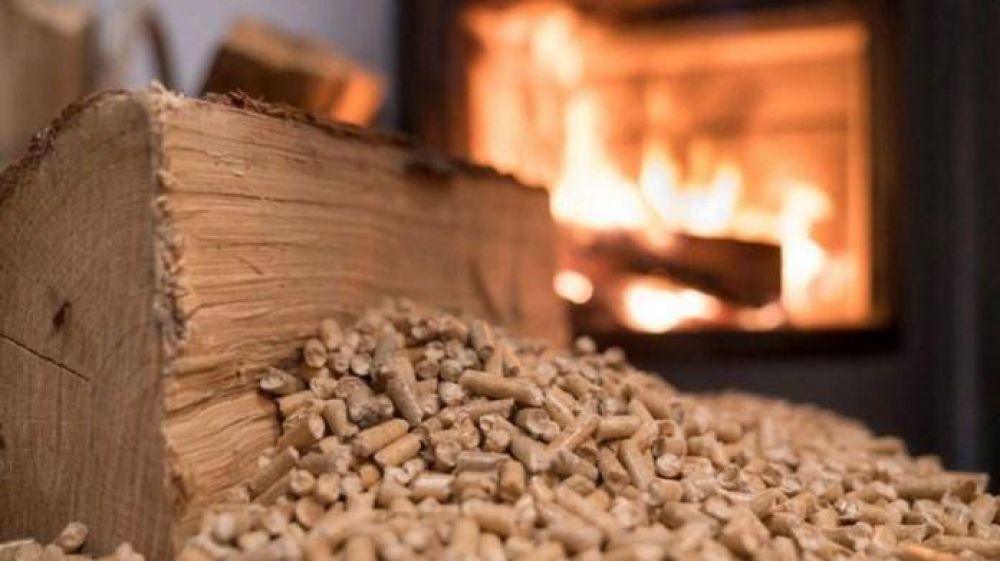
Forest residues at the service of biofuel
In Argentina, the waste produced by the forestry sector represents great potential for the production of bioenergy.
We know that worldwide energy consumption is growing and we still continue to use fossil fuels as the main source, which are located in some countries, causing great volatility in supply and serious environmental problems (air pollution, acid rain and emissions greenhouse gases).
A solution and a great opportunity is in the development of clean and renewable energies of biomass origin, which can be produced and consumed in a neutral CO2 environment.
Bioenergy is a renewable energy produced by materials derived from biological sources. Biomass resources are available in different forms or types: ONE OF THEM IS FOREST WASTE.
The great advantage of this type of energy is that it can produce liquid, gaseous and solid fuels, to be stored, transported and used with the same supply systems as fossil fuels.
In Argentina, the waste produced by the forestry sector represents great potential for the production of bioenergy.
We need to change this paradigm of energy for the good of all, and from our sector we want to raise awareness about the potential that we have at hand if we manage to promote methodologies that quantify forest biomass and generate an action plan to be able to promote work projects in this regard. .
The forest resources that we have in our country are: native forest (31,443,873 hectares) and implanted forest (1.15 million hectares). In turn, our forestry industry has a great diversity of establishments dedicated to different types of forestry productions, from sawing to the production of pulp and paper. Throughout this journey there is also waste that could be dumped into the production of biofuel.
Fortunately, there are already projects that put this form of energy production into practice, especially in the provinces of Corrientes and Misiones. But there is still a long way of dissemination, research and investments to be made, in order to move forward. Let's stay tuned for news and get involved with everything that our sector has to give.

IT MAY INTEREST YOU
 The tallest palm tree in the world is in South America: it is the height of a 20-story building
The worlds tallest palm tree stands deep in South America, a giant that challenges the limits of plant life Deep in South America, between the fog and the mountains, hides a giant tree that few know about. Majestic and silent, challenging the world on what plant life can achieve.
 INTA Delta begins propagation of seven Creole willow clones for ecological restoration in Paraná
As a result of the rescue, domestication and registration work carried out by Teresa Cerrillo, a leading researcher in Salix Genetic Improvement, within the framework of the National Genetic and Forest Resources Programs of INTA, the multiplication and propagation of seven clones of Creole willow (Salix humboldtiana) began recently registered in the National Seed Institute (INASE) by INTA Delta del Paraná.
 The DNA of forests: they discover what makes a tree resist drought
An international team, with the participation of INTA and Conicet, discovered that genetics can be decisive for trees to better resist droughts