Why are kitchen utensils made of wood?
Many of the kitchen utensils that we use in our day to day are made of wood. Today we are going to analyze the properties that make wood an optimal material for the manufacture of kitchen utensils.
First, wood is a material that does not conduct heat, therefore, it is possible to keep kitchen utensils (especially wooden ladles) exposed to heat without danger of burning.
The wood, in addition, is a material with great durability (as long as the maintenance is adequate) and have a great resistance, compared to its low weight. For this reason, it is used in wooden boards for cutting food or in wooden mallets for fillets.
Another advantage of wooden kitchen utensils is that wood is an inert material, that is, it does not react with other substances, which means that it does not contaminate food. In addition, wood is not attractive either for germs or bacteria, so the wood is much cleaner than other materials.
The wooden kitchen utensils are soft and delicate to avoid scratching the delicate surfaces of the pans and saucepans and are recommended especially for non-stick coatings or stainless steel. The use of a suitable material favors that the useful life of the kitchen tools is greater.
Finally, the wood and its great versatility give rise to endless designs, providing a special and unique to each kitchen. The different species of wood also provide their special touch, offering a wide range of color and characteristics to the wooden kitchen utensils.
We must not forget that wood is a natural, renewable, sustainable, reusable and recyclable material that fits perfectly in the circular economy and the use and management of this material favors the good condition of the mountains.
IT MAY INTEREST YOU
 The tallest palm tree in the world is in South America: it is the height of a 20-story building
The worlds tallest palm tree stands deep in South America, a giant that challenges the limits of plant life Deep in South America, between the fog and the mountains, hides a giant tree that few know about. Majestic and silent, challenging the world on what plant life can achieve.
 Color the streets pink and white in spring: which is the most beautiful tree in the world and why, according to AI
Its delicate branches, the soft tones of its petals and the harmonious shape of the tree make it an almost poetic image.
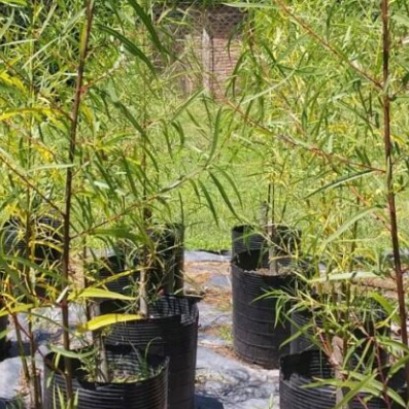 INTA Delta begins propagation of seven Creole willow clones for ecological restoration in Paraná
As a result of the rescue, domestication and registration work carried out by Teresa Cerrillo, a leading researcher in Salix Genetic Improvement, within the framework of the National Genetic and Forest Resources Programs of INTA, the multiplication and propagation of seven clones of Creole willow (Salix humboldtiana) began recently registered in the National Seed Institute (INASE) by INTA Delta del Paraná.