Así será el edificio de madera más alto de Estados Unidos
Framework, una estructura de 12 pisos, se ubicará en Portland, Oregón. Las características de esta fantástica obra de arquitectura moderna
En el centro de la ciudad de Portland, Oregón, se ubicará la torre llamada Framework que tendrá doce pisos. Fue diseñada por la firma Lever Architecture y se espera que su construcción esté lista para el año 2018.
El edificio de madera de 39 metros de altura, después de haber pasado las pruebas correspondientes acústicas, estructurales y de resistencia al fuego, es una realidad cercana. Dispondrá de un sistema innovador con una pared oscilante, compuesto por paneles de madera verticales y cables estratégicamente colocados en el centro del muro. De esta manera, ante un movimiento sísmico, dichos paneles podrán volver a su posición original.
Está pensado para un uso mixto, es decir, para oficinas y viviendas. Habrá 60 departamentos de uno o dos dormitorios y oficinas que estarán repartidas en cinco pisos de los doce que posee.
En planta baja, los 835 metros cuadrados serán destinados a comercios. El edificio, además, tendrá un estacionamiento para 102 bicicletas y una amplia terraza.
Se espera que se termine para el año 2018. La torre Framework únicamente será superada en altura por el edificio residencial de madera más alto del mundo, llamado Treet, de 14 pisos en Bergen, Noruega.

IT MAY INTEREST YOU
 The tallest palm tree in the world is in South America: it is the height of a 20-story building
The worlds tallest palm tree stands deep in South America, a giant that challenges the limits of plant life Deep in South America, between the fog and the mountains, hides a giant tree that few know about. Majestic and silent, challenging the world on what plant life can achieve.
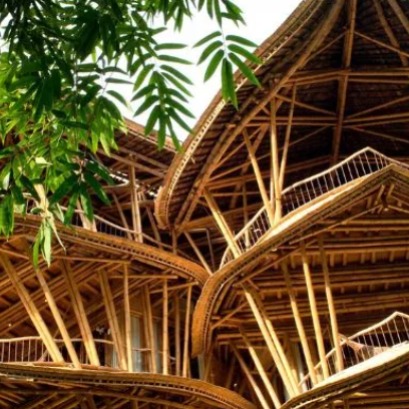 The South American country that changes construction thanks to an ancient, mega-resistant material: more than steel
This material that grows in South America creates the most resistant constructions and radically changes the world of architecture One particular building material has been used for millennia by various cultures in South America. This is due to its structural resistance that allows the creation of homes, bridges and shelters. Its archaeological presence shows that it was one of the most valued construction resources in seismic and humid areas.
 The DNA of forests: they discover what makes a tree resist drought
An international team, with the participation of INTA and Conicet, discovered that genetics can be decisive for trees to better resist droughts